Android Application Development Services: The 2025 Playbook
If you’re evaluating Android application development services, this playbook gives you a clear, practical path from idea to launch. You’ll learn how to choose the right stack, plan a phased roadmap, control costs, reduce risk, and measure ROI—without slowing your team down. Whether you’re in Toronto, Vancouver, or managing operations across Canada, these steps will help you deliver confidently.
- Scope ruthlessly and ship an MVP in 8–12 weeks; measure value before you scale.
- Favor Kotlin + Jetpack Compose, automated QA, and CI/CD from day one.
- Mitigate risks—device fragmentation, flaky APIs, and security—through contract tests, device labs, and OWASP MASVS practices.
- For Canada-based teams, plan around winter travel, holiday code freezes, and hybrid facilitation to align stakeholders faster.
Quick Answer
Android application development services cover discovery, UX/UI, Kotlin development, QA automation, release, and support. In ON at Unit 20 – 120 Woodstream Blvd (L4L 7Z1), Codepaper Technologies structures projects in short, measurable sprints so you can launch faster and de-risk each step.
Local Tips
- Tip 1: On-site workshops near Woodstream Blvd are easiest via Highway 7 and Highway 427; we can host or come to you across the GTA.
- Tip 2: Factor in winter driving and holiday code freezes (late December–early January) when planning releases and UAT windows.
- Tip 3: For teams flying in, Toronto Pearson (YYZ) is 15–20 minutes away in light traffic; morning sessions help avoid rush hour.
Below, we unpack the full lifecycle, trade-offs, risks, and a realistic delivery plan. Expect plain English, concrete examples, and checklists you can put to work this week.
What falls under Android application development services?
Android work spans the full product lifecycle—from discovery to support. The most effective teams keep feedback loops tight so every sprint turns risk into learning.
- Discovery & product framing: Clarify business goals, user jobs, constraints, and success metrics. Translate this into a prioritized roadmap and thin-slice releases.
- UX/UI & design systems: Material Design 3, motion, and color tokens for consistency; accessibility as a baseline (contrast, touch targets, TalkBack).
- Architecture & stack: Kotlin + Jetpack Compose, Coroutines/Flows, Hilt, Room/SQLDelight, Retrofit/Ktor, WorkManager, Firebase/Crashlytics.
- API & data integration: REST/GraphQL, contract tests, pagination, offline-first sync and conflict resolution where needed.
- Security & compliance: OWASP MASVS alignment, secure storage, Play Integrity API, SDLC threat modeling, PII handling policies.
- QA automation: Unit, integration, UI tests; device lab coverage; crash monitoring and ANR reduction.
- Release & scale-up: Google Play policies, phased rollout, feature flags, observability, SLA-based support.
Discovery that reduces rework
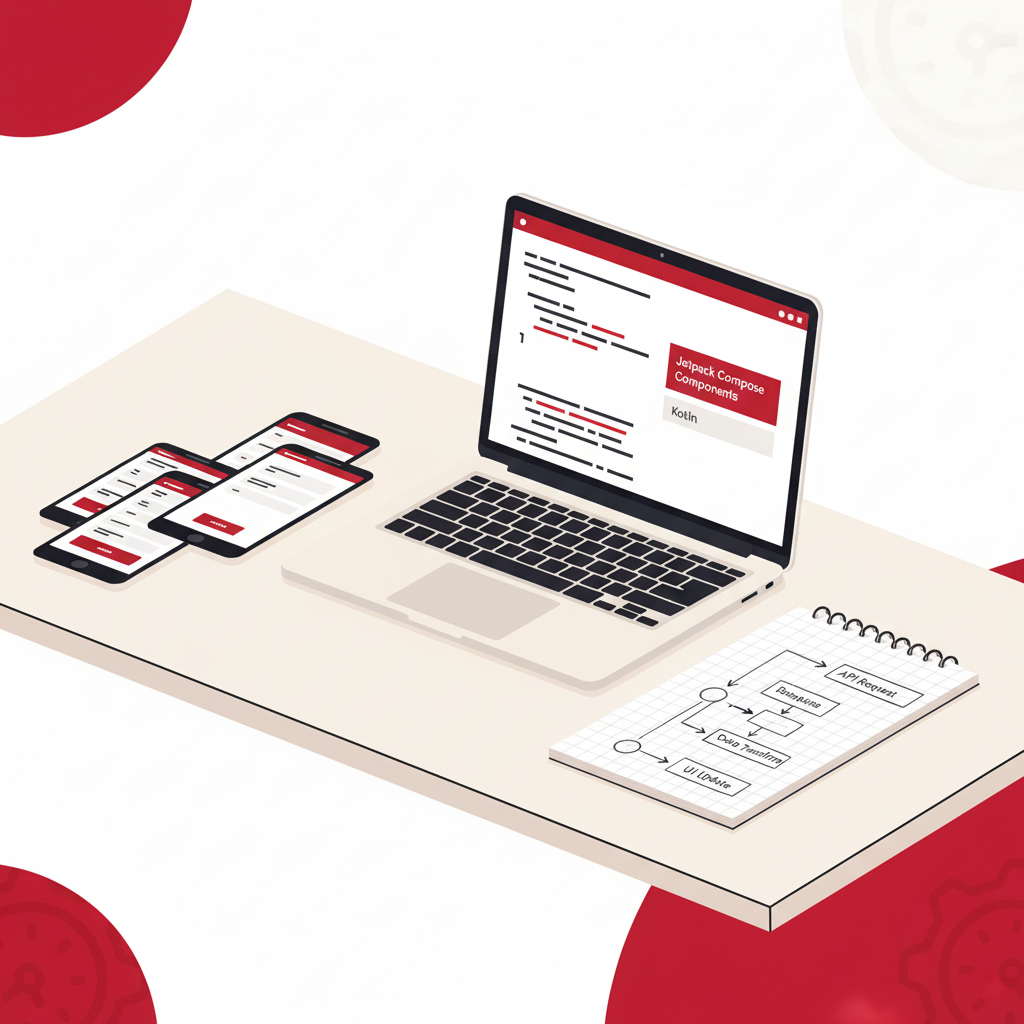
Begin with user interviews, quick clickable prototypes, and a service blueprint. Capture constraints (regulated data, device environments, offline usage) before writing code. Output: a 4–6 week plan with the first two releases mapped, story points estimated, and explicit “out-of-scope” items to protect timelines.
Design systems and accessibility that scale
Build a small, reusable component library in Jetpack Compose with tokens for color, spacing, type, and elevation. Bake in accessibility early; fixing contrast or focus order later is expensive and slows down velocity.
Native vs. cross-platform (and when to choose each)
If you need maximum performance, advanced camera/ML, or deep platform integration, go native Kotlin. If iOS parity is urgent and feature sets are modest, consider Flutter or React Native. For a balanced view of trade-offs, see an in-depth primer on native vs. hybrid choices.
Why Android first? Real use cases
In Canadian field operations, Android dominates because of rugged hardware availability, broad price points, and mature mobile device management (MDM). Manufacturing floors, franchise networks, and fleet teams often standardize on Android for camera workflows, barcode scanning, and kiosk modes.
- Field inspections: Offline forms, photo capture with annotations, GPS timestamps.
- Franchise audits: Guided checklists, evidence photos, and tamper-resistant flows.
- Inventory & manufacturing: Batch scanning, Bluetooth device pairing, and role-based access.
- Finance & back office: Secure biometrics, encrypted storage, and audit logs.
We’ve seen Android-first strategies reduce device costs and onboarding time—and in some cases eliminate proprietary handhelds entirely.
How delivery works in 2025
Modern Android programs are iterative, observable, and automated. Here’s a snapshot of a typical engagement rhythm.
| Phase | Primary Outcomes | Typical Duration |
|---|---|---|
| Discovery & Framing | Personas, journeys, prototype, backlog, MVP scope | 2–3 weeks |
| MVP Build | Core flows, analytics, automated tests, CI/CD | 6–8 weeks |
| Pilot & Learn | Phased rollout, A/B tests, crash-free stability | 2–4 weeks |
| Scale & Optimize | Feature flags, observability, release trains | Ongoing |
Expect weekly demos, clear acceptance criteria, and decision logs. Feature flags and staged rollouts de-risk shipping while giving stakeholders real usage data.
Costs, timelines, and ROI
Budgets vary with complexity and risk. The fastest path to measurable ROI is a focused MVP that targets a single high-value workflow, ships to a narrow audience, and collects the right metrics from day one.
- Lean scope: Prioritize one or two “money-making” or “risk-reducing” flows rather than building everything at once.
- Right-size the team: A typical MVP team is 1 product lead, 1 designer, 2 Android engineers, 1 QA, and a fractional architect/DevOps practitioner.
- Invest where it pays: Analytics, QA automation, and crash monitoring are cheaper than post-release firefighting.
Want a broader strategy view? Explore our guide to shipping faster without compromise and our practical app growth strategy.
Key risks and how to reduce them
Here’s how we tackle the most common Android risks early.
- Scope creep: Guardrails via explicit out-of-scope lists and change control. Keep a parking lot for good ideas that don’t block MVP.
- API instability: Consumer-driven contract tests and versioned endpoints; mock servers unblock mobile parallelization.
- Device fragmentation: Run a device lab matrix across OS versions, OEMs, and form factors. Use Play Console’s pre-launch reports to catch regressions.
- Security lapses: Align with OWASP MASVS, adopt Play Integrity API, and protect secrets with hardware-backed keystore and server checks.
- Offline edge cases: Build explicit states for syncing, conflicts, and retries; see a deep dive on offline-first architectures.
Recommended 2025 Android stack
These are the battle-tested choices we reach for on most new builds.
- Language & UI: Kotlin, Jetpack Compose
- Concurrency: Coroutines, Flow
- DI: Hilt
- Persistence: Room or SQLDelight
- Networking: Retrofit or Ktor
- Background work: WorkManager
- Observability: Firebase Crashlytics, Performance Monitoring, custom logs/metrics
- Security: Play Integrity API, hardware-backed Keystore, SSL pinning where appropriate
- CI/CD: GitHub Actions or GitLab CI with automated builds, tests, linting, and Play upload
Comparison: Native Kotlin vs. Cross-Platform
| Dimension | Native (Kotlin + Compose) | Cross-Platform (Flutter / React Native) |
|---|---|---|
| Performance | Best-in-class, direct access to Android APIs | Near-native for most cases; edge cases can need native modules |
| Time to iOS parity | Separate build/timeline for iOS | Faster parity using shared UI and logic |
| Hiring & talent | Strong talent pool for Kotlin | Good availability; must vet plugin ecosystem |
| Long-term maintainability | Excellent; aligns with platform direction | Good if you avoid heavy native escapes |
Soft CTA — Plan your MVP
Get a 45-minute assessment to right-size scope, team, and timelines. We’ll review your goals, sketch a thin-slice roadmap, and outline an 8–12 week MVP plan.
See our mobile app development services and our 2025 playbook for Toronto teams.
Local context and logistics
For GTA and Southern Ontario teams, hybrid working sessions accelerate consensus without heavy travel. We can host at Unit 20 – 120 Woodstream Blvd (L4L 7Z1) or facilitate on-site workshops across the region. Remote stakeholders can join via whiteboarding and prototyping tools to keep momentum high regardless of weather or schedules.
Case snapshot: From paper to pixels in 8 weeks
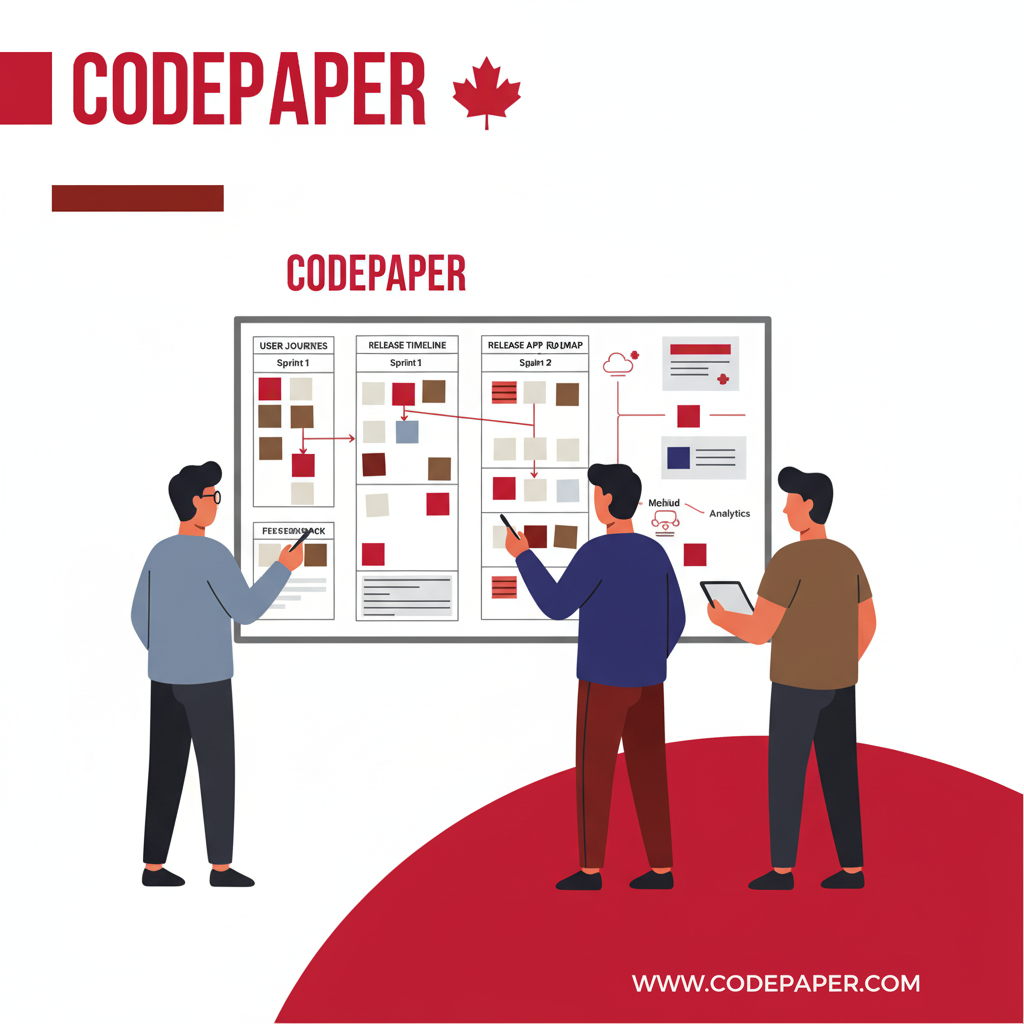
A regional fleet services firm digitized roadside inspections with an Android app supporting offline capture, barcode scans, and photo evidence. The MVP targeted a small pilot group and used feature flags to turn on modules gradually. Within eight weeks, manual entry time dropped ~40%, and audit readiness improved thanks to timestamped logs and centralized storage.
Measure what matters
Define KPIs before the first sprint and wire them into your analytics plan. A few you can adopt immediately:
- Time-to-first-value (TTFV): Minutes from onboarding to completing the first meaningful task.
- Crash-free sessions: Track and hold above 99.5% for production.
- Session success rate: Percentage of sessions that complete a target flow (e.g., inspection submitted).
- Adoption by role: Who’s using the app daily/weekly? Where are drop-offs?
To keep informed about changes in the ecosystem, scan current mobile app development trends and align them with your roadmap instead of chasing every shiny object.
Governance and security essentials
Security and compliance are not bolt-ons. We harden the app and pipeline with:
- Threat modeling: Identify abuse cases and mitigate early.
- Secure data handling: Encryption at rest and in transit, strict PII access patterns, server-side checks.
- Store policies: Play Console compliance, Privacy/Terms hygiene, and integrity checks.
- Ops hygiene: Protected branches, code reviews, secrets management, and dependency monitoring.
Choosing the right partner
Look for a custom software development company in Canada that proves speed and quality with real case studies, not just slideware. Signs you’re in good hands:
- Short discovery to actionable roadmap (weeks, not months).
- Transparent demos and measurable outcomes.
- Automated QA, device matrix testing, and clear definitions of done.
- Pragmatic guidance on native vs. cross-platform trade-offs.
Codepaper is a Vaughan ON software company with strong delivery across Android, iOS, and web. We also support mobile app development Toronto initiatives for startups and enterprises, from MVPs to complex rollouts.
Delivery mechanics: CI/CD done right
Small automation steps compound quickly. We typically establish:
- Automated builds, unit/UI tests, and lint checks on pull requests.
- Signed, versioned artifacts with changelogs and release notes.
- Staged rollouts with real-time crash and performance dashboards.
- Feature flags and remote config to decouple release from deploy.
Post-launch support and iteration
After your MVP lands, the work shifts to learning and optimization. A steady release train (e.g., every two weeks) balances new features with quality. Keep your backlog tight, let data guide prioritization, and retire features that don’t pull their weight.
FAQs
How much do Android application development services cost?
Budgets depend on scope, risk, and integrations. A focused MVP often ranges from a few sprints to a quarter of work for a lean team (designer, two Android engineers, QA, part-time product/architect). Costs shrink when you minimize scope, avoid unknown integrations, and automate testing early.
Is native Kotlin better than Flutter or React Native?
It depends on goals. Native Kotlin maximizes performance and access to Android capabilities. Cross-platform can be ideal if you need fast iOS parity and your features don’t demand heavy native modules. See a primer on native vs. hybrid trade-offs.
How long to ship an MVP?
With clear scope and stable APIs, many MVPs ship in 8–12 weeks. The path is discovery (2–3 weeks), build (6–8 weeks), and a short pilot (2–4 weeks) with phased rollout and feature flags.
What about maintenance and updates?
Plan a release train and reserve capacity for bug fixes and small improvements. Keep dependencies up to date, monitor crash-free sessions, and schedule quarterly security reviews. Add new features only when data proves demand.
Do we own the code?
Yes—engagements should make code and assets your property, with private repos and clean licensing for third-party libraries. Ask for a handover checklist, runbooks, and architecture diagrams at project close.
Key Takeaways
- Start small and measure: Pick one high-impact workflow and ship an MVP fast.
- Invest in automation: CI/CD and QA cut costs and avoid post-release chaos.
- Mitigate early: Handle fragmentation, security, and offline cases from the start.
- Use data to prioritize: Let analytics—not opinions—drive your roadmap.
Ready to move? Explore our mobile app development services or reach out for a short planning session. We’ll help you choose the smartest path from idea to impact.
About Codepaper Technologies Inc. We’re a custom software development company in Canada serving Toronto, Vancouver, and clients internationally. From AI automation consultancy to end-to-end product builds, we deliver software that ships fast and scales with confidence.
