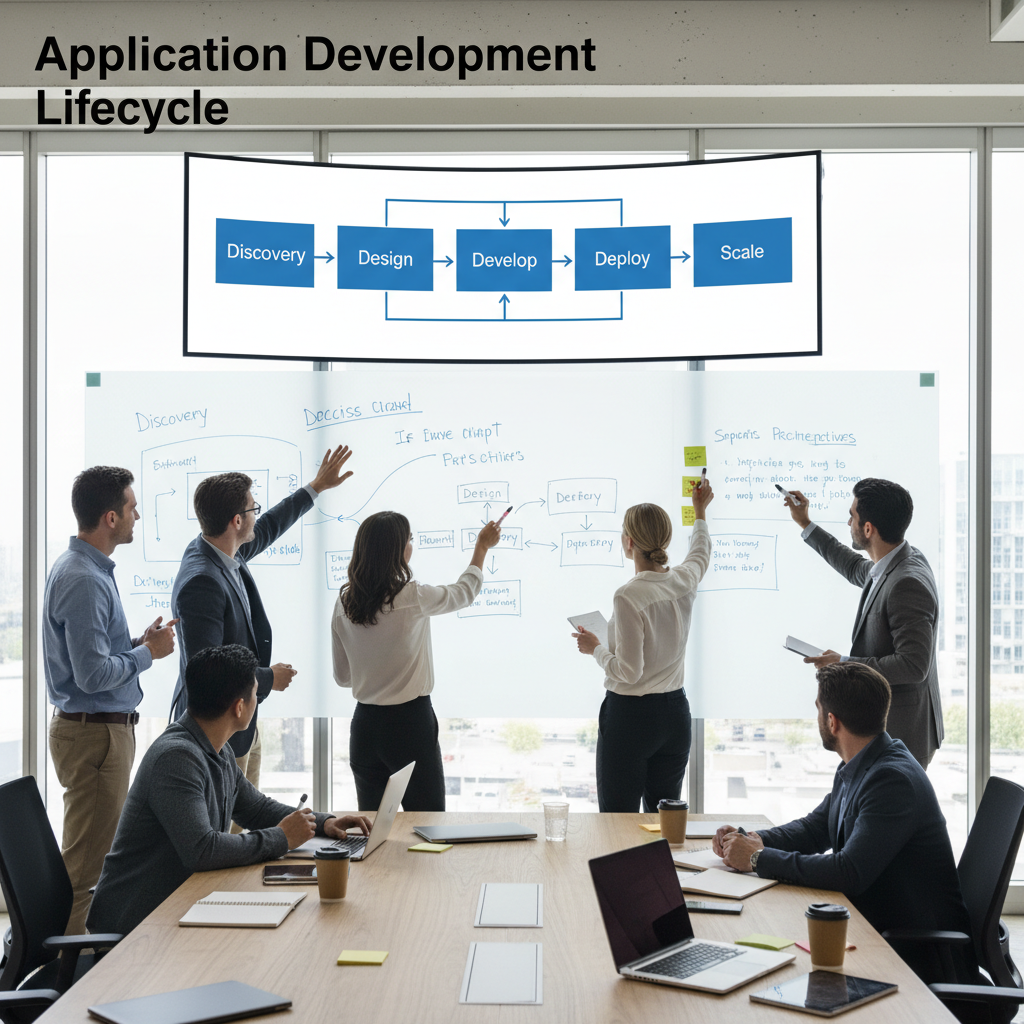
Application Development Company: Build In-House or Outsource?
Quick Answer
An application development company offers end-to-end strategy, design, engineering, DevOps, and support so you can ship faster with less risk. If you’re near Unit 20 – 120 Woodstream Blvd (ON., Canada), Codepaper Technologies Inc. can partner from discovery to launch—especially when speed, security, and scalability are critical.
If you’re weighing an in-house build versus partnering with an application development company, you’re not alone. The right choice depends on timing, risk, skills, and long-term ownership. This complete guide uses Codepaper Technologies Inc.’s real-world practices to help you decide with confidence.
Summary
- What you’ll learn: Clear criteria to choose in-house, partner, or hybrid; how modern delivery works; guardrails that reduce rework; and the tech stack that accelerates outcomes.
- Why it matters: Your decision affects time-to-market, quality, maintainability, and risk.
- Who this is for: Startups launching MVPs, mid-sized companies scaling operations, and enterprises modernizing legacy systems in Canada and the U.S.
- Local context: Codepaper serves Toronto, Vancouver, and clients across North America from ON., Canada.
Table of Contents
- What Is an Application Development Company?
- Why This Choice Matters
- How Modern App Delivery Works
- In-House vs Partner vs Hybrid (Comparison)
- Approaches & Engagement Models
- Best Practices (2025)
- Tools, Tech & Reusable Resources
- Examples & Mini Case Studies
- FAQ
- Key Takeaways & Next Steps
What Is an Application Development Company?
An application development company designs, builds, deploys, and maintains software products across web, mobile, and cloud—aligning technology with business outcomes.
- Core capabilities: Product strategy, UX/UI, software architecture, full-stack development, QA, DevOps, analytics, and ongoing support.
- Deliverables: Custom applications, APIs and integrations, iOS/Android/cross-platform apps, eCommerce platforms, data analytics pipelines, and AI automations.
- Where it excels: Shipping MVPs in weeks, hardening enterprise systems, modernizing legacy applications, and enabling secure scale.
How Codepaper Technologies Inc. fits this model
- End-to-end services: Custom Software Development, AI Automation Consultancy, Mobile App Development, Web Development, Laravel Development, DevOps Services, Website Design, eCommerce Development, Data Analytics, and Staff Augmentation.
- Technology stack: Laravel, React, Vue.js, Flutter, AWS, Azure, and Google Cloud—tailored to business goals.
- Delivery velocity: Launch products in weeks with managed delivery, rigorous testing, and enterprise-grade practices.
- Proven trust: 200+ startups and enterprises served; featured on 400+ news sites; verified by reputable platforms.
- Industry range: Fleet management, finance and banking, education and training, eCommerce and retail, construction, manufacturing, healthcare, transportation, and solar energy.
Why This Choice Matters
Your build strategy directly influences speed, risk, security, and maintainability.
- Speed-to-value: A seasoned partner brings proven playbooks, toolchains, and talent on day one.
- Specialized skills: Access senior architects, cloud engineers, AI practitioners, and mobile experts without long hiring cycles.
- Risk reduction: Strong QA, DevSecOps, and governance lower defects and production incidents.
- Scalability: Adjust capacity as needs change; avoid bottlenecks and attrition risk.
- Focus: Keep your team focused on core business while experts handle delivery.
Signals you’re ready to partner with an application development company
- You need an MVP in weeks—not quarters—and can’t pause growth for hiring and onboarding.
- Legacy systems slow you down; modernization and integrations are overdue.
- Security and compliance demand a repeatable, auditable process.
- You want to adopt AI and workflow automation but need guidance on responsible usage.
- Deployments are slow; you lack robust CI/CD, observability, and rollback plans.
How Modern App Delivery Works
Great software ships through a transparent, disciplined process—prioritizing outcomes, quality, and iteration.
- 1) Discovery & Alignment
- Clarify goals, KPIs, users, constraints, and success measures.
- Capture risks and assumptions; align stakeholders on a roadmap.
- Produce a Vision & Scope one-pager and initial backlog.
- 2) Product & Architecture
- Map user journeys and craft UX/UI wireframes and clickable prototypes.
- Select a stack fit for scale: Laravel + React/Vue, Flutter for mobile, cloud-native services on AWS/Azure/GCP.
- Design for security, reliability, and observability from day one.
- 3) Build & Integrate
- Ship in sprints; demo frequently; keep requirements traceable to acceptance criteria.
- Automate testing (unit, integration, end-to-end) and security checks; enforce code reviews.
- Establish CI/CD pipelines, infrastructure-as-code, and repeatable environments.
- 4) Launch & Operate
- Harden with performance, load, and security testing; prepare runbooks and alerts.
- Instrument analytics and tracing; use feature flags, blue/green or canary releases.
- Iterate with a release train, post-release reviews, and a prioritized backlog.
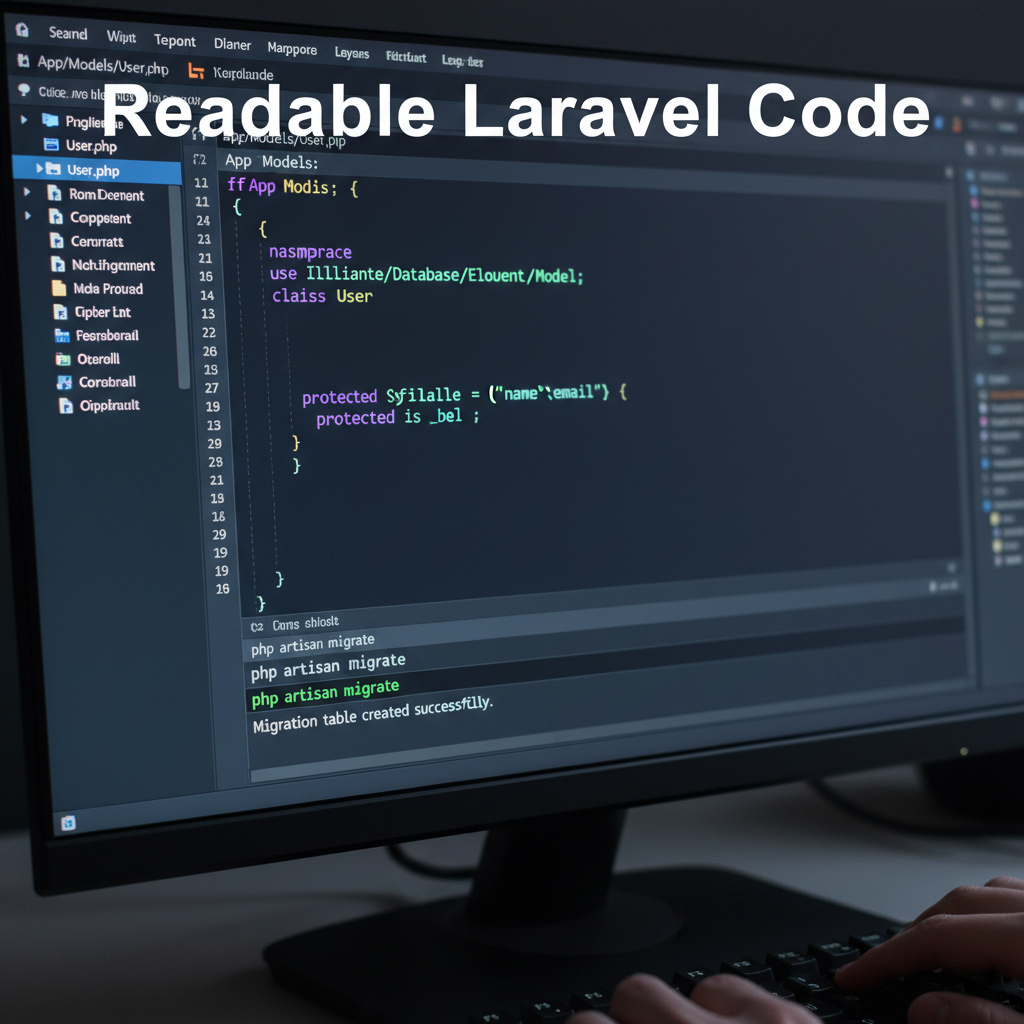
Security and quality by design
- Secure coding: Follow OWASP-aligned standards, dependency scanning, and secrets management.
- Test strategy: Balanced test pyramid; shift-left testing with CI gates.
- Release safety: Feature flags, blue/green and canary deploys, instant rollback.
- Observability: Centralized logging, metrics, dashboards, tracing, and error tracking.
In-House vs Partner vs Hybrid (Comparison)
Use this side-by-side to pick the right path for your situation.
| Factor | In-House Team | Application Development Company | Hybrid |
|---|---|---|---|
| Speed | Slower at start (hiring, onboarding) | Fast (ready-made teams and playbooks) | Fast for surges; steady internal cadence |
| Expertise | Depth in your domain over time | Broad senior skills on demand | Best of both |
| Governance | You build process and guardrails | Mature practices baked in | Adopt partner guardrails; keep ownership |
| Scalability | Limited by recruiting capacity | Scale up/down quickly | Flexible capacity |
| Knowledge Retention | Strong institutional knowledge | Requires solid documentation and handoff | Retain core knowledge; scale with partner |
| Compliance & Security | Build controls internally | Prebuilt controls and auditability | Blend controls; align to your standards |
| Change Management | Cultural work required | Experienced with transformations | Guided evolution |
Approaches & Engagement Models
Pick an approach aligned to urgency, risk, and goals.
Common delivery approaches
- MVP-first: Prove value quickly; prioritize highest-impact features and instrument analytics from the start.
- Incremental modernization: Replace legacy piece by piece (strangler pattern), de-risking each phase.
- Platform rebuild: Re-architect monoliths into cloud-native services for scale and reliability.
- Automation-first: Apply AI and workflow automation to unlock operational efficiency.
Engagement models with an application development company
- Project-based: Clear scope and outcomes; ideal for MVPs, pilots, and discrete rebuilds.
- Dedicated team: Long-running roadmap with predictable velocity and extended capacity.
- Staff augmentation services: Fill skill gaps (architecture, mobile, DevOps, data) while retaining day-to-day control.
- Managed delivery (enterprise): Governance, reporting, SLAs, and risk management baked in.
How Codepaper engages
- Startups (MVP development): Launch in weeks, validate with users, and scale based on real feedback.
- Mid-sized companies: Add capacity for web/mobile features, integrations, and eCommerce enhancements.
- Enterprises: Modernize legacy platforms, establish CI/CD, and introduce cloud-native patterns with guardrails.
Best Practices (2025)
These guardrails reduce rework and improve outcomes regardless of model.
- Define outcomes early: Set KPIs, acceptance criteria, and a measurable Definition of Done.
- Design for change: Modular architecture, API-first, and clean interfaces enable evolution.
- Codify standards: Style guides, code review checklists, and secure defaults.
- Automate quality: Tests at multiple levels; static analysis; dependency and secret scans.
- Plan releases: Feature flags, runbooks, and rollback strategies—no big-bang deploys.
- Instrument everything: Telemetry for performance, reliability, and user behavior.
- Document decisions: Architecture Decision Records (ADRs) and living docs for context.
- Prepare for scale: Capacity planning, horizontal scaling, and caching strategies.
Governance without the red tape
- Lightweight ceremonies: Backlog hygiene, scope control, and risk reviews (RAID).
- Quarterly architecture checks: Threat modeling, cost-of-change reviews, and performance audits.
- Decision clarity: RACI for ownership; visible metrics for accountability.
Tools, Tech & Reusable Resources
Use a stack that supports security, velocity, and reliability.
- Frameworks: Laravel (PHP) for back end; React or Vue.js for web; Flutter for cross-platform apps.
- Cloud & DevOps: AWS/Azure/GCP, infrastructure-as-code, containerization, CI/CD pipelines, automated testing.
- Data & AI: Analytics dashboards, ML integration, and workflow automation with responsible data practices.
- Quality & Security: Static analysis, dependency scanning, SAST/DAST, and secrets vaulting.
Templates you can reuse
- Vision & Scope one-pager template
- Architecture Decision Record (ADR) template
- Release readiness checklist
- Runbook and incident response outline
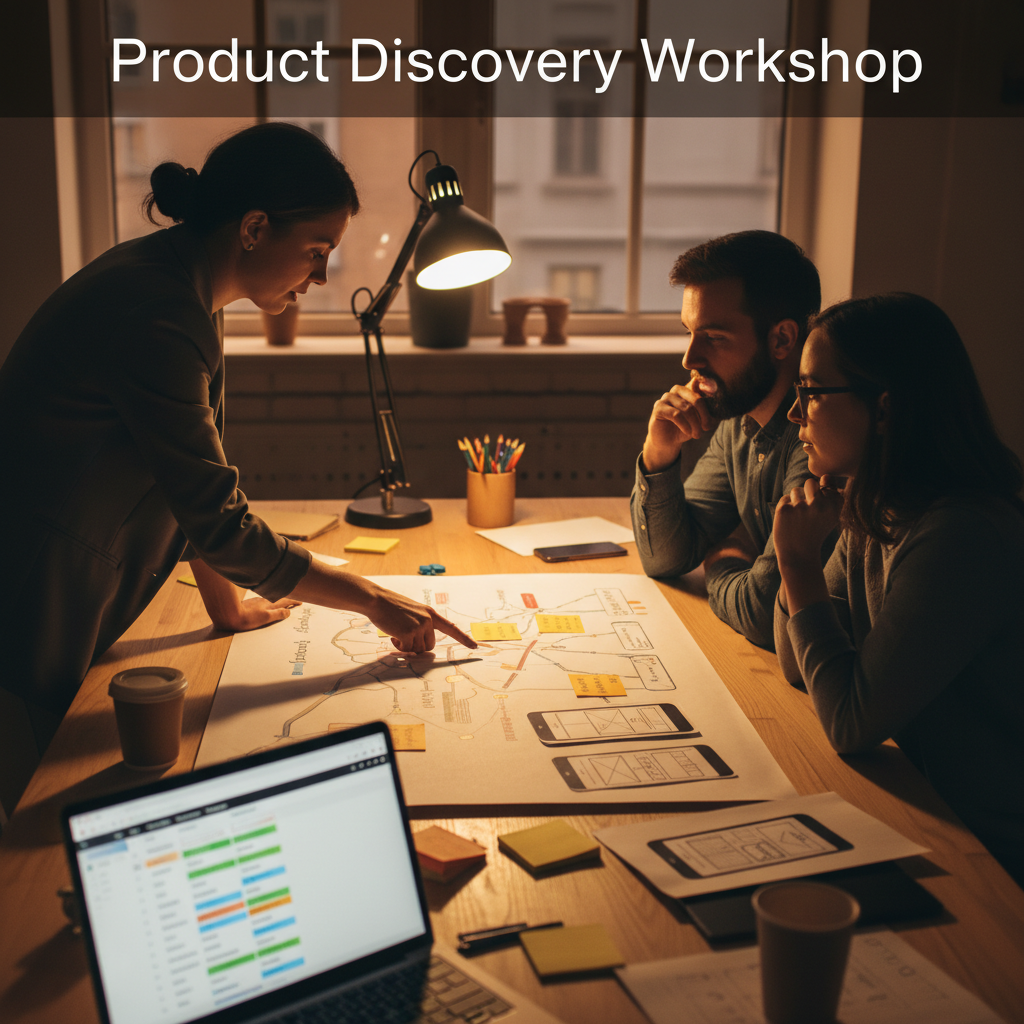
Examples & Mini Case Studies
Scenarios reflecting how an application development company like Codepaper delivers outcomes across industries.
- Fleet management software:
- Challenge: Real-time tracking and route optimization across a mixed vehicle fleet.
- Solution: Cloud-native back end with Laravel, real-time mapping, and analytics dashboards.
- Result: Higher on-time arrivals, improved utilization, and better customer ETAs.
- Retail eCommerce development:
- Challenge: Slow catalog updates and poor mobile conversion.
- Solution: Headless storefront with React/Vue, optimized API layer, and CDN caching.
- Result: Faster page loads, increased conversion, and simplified merchandising.
- Healthcare scheduling portal:
- Challenge: High call volume and missed appointments.
- Solution: Secure patient portal, HIPAA-conscious workflows, and SMS reminders.
- Result: Higher self-serve rates and fewer no-shows.
- Education & training (mobile LMS):
- Challenge: Low course completion on mobile.
- Solution: Flutter app with offline mode, microlearning, and gamified progress.
- Result: Boost in completion and engagement.
- Manufacturing inventory management software:
- Challenge: Manual processes and poor stock accuracy.
- Solution: Barcode-enabled workflows, real-time dashboards, and ERP integration.
- Result: Reduced stockouts and faster cycle counts.
- Finance and banking workflow automation:
- Challenge: Paper-heavy onboarding and compliance checks.
- Solution: AI-assisted document extraction and automated verification routes.
- Result: Shorter onboarding times and fewer errors.
Local Tips
- Tip 1: For workshops near Unit 20 – 120 Woodstream Blvd, plan arrivals around Highway 7 and 427 traffic windows for smoother on-site sessions.
- Tip 2: Avoid major Canadian holidays when scheduling design reviews and stakeholder approvals to keep momentum.
- Tip 3: If your team spans Canada and the U.S., schedule sprint demos in Eastern Time to streamline cross-border collaboration.
IMPORTANT: These tips reflect Codepaper’s operational nuances for clients collaborating in and around ON., Canada.
FAQ
How do I decide between in-house and a partner?
Evaluate urgency, skills, risk, and long-term ownership. If speed and specialized expertise are critical, start with a partner for an MVP, then evolve to hybrid. If your product is stable and core to your business with ongoing needs, an in-house team can be ideal.
What’s the first step with an application development company?
Begin with a discovery session to align goals, scope, and milestones. Expect a Vision & Scope one-pager, early architecture notes, a high-level release plan, and a prioritized backlog with acceptance criteria.
Can a partner help with AI automation and analytics?
Yes. From opportunity assessment to pilot design and deployment, a seasoned partner guides responsible AI and analytics integration—covering data pipelines, model selection, and observability.
How do you reduce delivery risk?
Use secure coding standards, automated testing, code reviews, CI/CD, and observability. Manage releases with feature flags and phased rollouts; conduct post-release reviews to capture learning and prevent regressions.
Do you support enterprise-grade governance?
Yes. Managed delivery includes reporting, SLAs, threat modeling, quarterly architecture reviews, and compliance-aligned guardrails—without slowing teams.
Key Takeaways & Next Steps
- Pick your model: In-house for long-term core products; partner for speed and specialization; hybrid for balance.
- Adopt guardrails: Clear KPIs, secure defaults, automated tests, CI/CD, and observability.
- Start small: Run a discovery workshop and pilot sprint; measure with real users.
- Scale thoughtfully: Document decisions, instrument releases, and revisit architecture quarterly.
- Local help: Collaborate with Codepaper in ON., Canada for discovery-to-launch support.
