Need Custom Software? How to Choose an Application Development Company
Quick Answer
Choosing an application development company comes down to outcomes, security, and delivery discipline. From our ON. base at Unit 20 – 120 Woodstream Blvd (L4L 7Z1), Codepaper Technologies Inc. partners with startups, mid-sized firms, and enterprises across Canada and the U.S. to plan, build, and ship reliable software fast—backed by AI automation, Laravel expertise, DevOps, and managed delivery.
Here’s the situation. Off-the-shelf tools rarely fit your workflows. A strong application development company helps you launch fast, integrate cleanly, and scale without rework. In this guide, we’ll show you exactly how to evaluate partners and set your project up for success.
- What you’ll learn:
- How to define your must-haves before vendor outreach
- What separates reliable partners from risky bets
- How Codepaper approaches discovery, delivery, QA, and DevOps
- What to include in a practical RFP and selection checklist
- Real examples from industries we actively serve
- Who this is for:
- Founders planning an MVP in weeks, not months
- Operations leaders modernizing legacy systems
- Enterprise teams seeking managed delivery and governance
Summary
- Define outcomes, constraints, and success metrics first; then match partners to those needs.
- Favor companies with full-stack capability: product, design, engineering, QA, and DevOps.
- Insist on discovery, architecture, and a thin-slice MVP to reduce scope and delivery risk.
- Require security, testing, and observability from day one (not after launch).
- Use a due diligence checklist and a short, structured RFP to evaluate fit quickly.
Table of Contents
- What Is an Application Development Company?
- Why the Right Partner Matters
- How Professional App Development Works
- Engagement Models & Approaches
- Best Practices (Battle-Tested)
- Tools, Tech, and Delivery Enablers
- Build Options Compared
- Vendor Due Diligence Checklist
- Practical RFP Outline
- Case-Style Examples (Real Scenarios)
- FAQ
- Key Takeaways
- Conclusion & Next Steps
What Is an Application Development Company?
An application development company plans, designs, builds, and maintains software across web, mobile, and cloud. The goal: deliver business outcomes with secure, scalable, maintainable applications.
- Typical scope:
- Product discovery, business analysis, and UX/UI design
- Architecture, front-end, back-end, and integrations
- Quality assurance (manual + automated) and performance testing
- DevOps (CI/CD, infrastructure as code, observability)
- Security hardening, compliance alignment, and ongoing support
- Outputs you can expect:
- Custom web applications and APIs
- iOS and Android apps (native or cross‑platform)
- Data pipelines, analytics dashboards, and workflow automation
- eCommerce storefronts and integrations
- Where Codepaper fits (real services we deliver):
- Custom Software Development and Laravel Development
- Mobile App Development (iOS, Android, Flutter)
- AI Automation Consultancy and workflow automation
- Web Development and Website Design
- DevOps Services and CI/CD
- eCommerce Development
- Data Analytics (consultation + implementation)
- Staff Augmentation for specialized skills
- Who benefits most:
- Startups validating an MVP with real users
- Mid-sized companies scaling platforms and operations
- Enterprises seeking secure, compliant, managed delivery
Why the Right Partner Matters
The partner you choose determines speed to value, reliability, and total lifecycle effort.
- Speed without shortcuts: Codepaper is known for launching products in weeks thanks to proven playbooks and tight feedback loops.
- Secure by design: Threat modeling, secure coding standards, dependency checks, and secrets management from day one.
- Built to scale: Cloud-native architectures on AWS, Azure, or Google Cloud ready for growth.
- Reduced delivery risk: Managed delivery model, clear governance, and progress reporting for enterprise programs.
- Full-stack capability: Strategy → Design → Engineering → QA → DevOps → Analytics → Support, all under one roof.
- Proven credibility: 200+ clients served; featured on 400+ publications (Digital Journal, Market Watch, Benzinga).
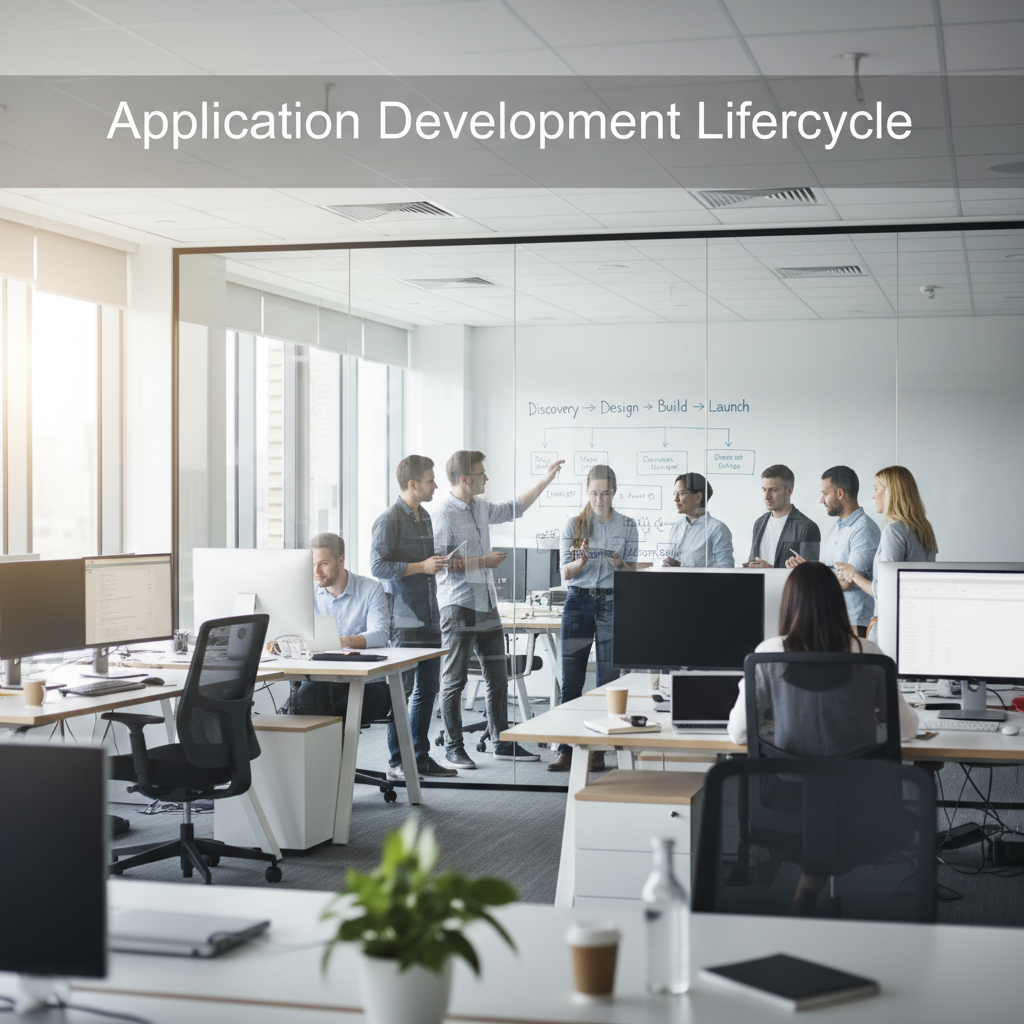
How Professional App Development Works
Great outcomes come from a clear rhythm—discovery, thin-slice delivery, and continuous improvement.
- 1) Discovery & alignment:
- Define business outcomes, KPIs, constraints, and risks.
- Map user journeys and critical workflows; identify compliance needs.
- Prioritize features that de-risk the roadmap and deliver value first.
- 2) Solution architecture:
- Select stacks that fit your context: Laravel + React/Vue for web; Flutter for cross-platform mobile.
- Capture non-functional requirements: security, performance, availability, support windows.
- Plan integrations, data flows, and environments (dev/stage/prod).
- 3) Iterative delivery (scrum/kanban):
- Build in short sprints with demos, backlog hygiene, and stakeholder feedback.
- Ship a “thin slice” MVP to validate assumptions quickly.
- Measure outcomes (activation, cycle time, error budgets) and adjust roadmap.
- 4) DevOps & CI/CD:
- Automate build, test, deploy, and rollback.
- Use infrastructure as code and container orchestration for repeatable environments.
- Add observability (logs, metrics, tracing) and alerts for fast recovery.
- 5) QA & hardening:
- Unit, integration, and end-to-end tests with coverage targets.
- Performance testing and OWASP-aligned security practices.
- UAT with real user scenarios; readiness gates before launch.
- 6) Launch & scale:
- Blue/green or canary deploys to reduce risk.
- Runbooks for incident response and on-call procedures.
- Continuous improvement cycles post-launch.
Engagement Models & Approaches
Pick the model that fits your stage, risk tolerance, and internal capacity.
- MVP development (startups):
- Objective: validate value with real users fast.
- Focus: thin slice of features that prove the core use case.
- Benefit: learning and investor readiness without overbuilding.
- Managed delivery (enterprise):
- Objective: outcomes with governance and reporting baked in.
- Focus: multi-team coordination, standards, and risk management.
- Benefit: predictable delivery with executive visibility.
- Staff augmentation:
- Objective: extend your team with specialized talent.
- Focus: Laravel, React, Vue, Flutter, DevOps, QA, analytics.
- Benefit: speed and flexibility without long hiring cycles.
- Legacy modernization:
- Objective: retire technical debt and improve performance.
- Focus: re-platform, re-architect, refactor, and migrate data.
- Benefit: lower maintenance risk and better scalability.
- AI automation consultancy:
- Objective: automate repeatable tasks and augment decisions.
- Focus: opportunity assessment, solution design, responsible AI.
- Benefit: throughput gains and better customer experience.
Best Practices (Battle-Tested)
- Write outcomes, not features:
- State the result you want (e.g., “reduce manual entry by 50%”) and trace each feature to it.
- Use KPIs like activation rate, cycle time, and lead time to validate progress.
- Keep the first release thin:
- Defer nice-to-haves; ship the smallest version that delivers measurable impact.
- Use feature flags to reduce risk while experimenting.
- Favor proven stacks:
- Laravel + React/Vue for robust, maintainable web platforms.
- Flutter for cross-platform mobile with near-native performance.
- Automate testing early:
- Unit, integration, UI regression; set coverage thresholds and track trends.
- Include performance budgets in CI (response time, memory, concurrency).
- Make security a feature:
- Threat modeling, dependency scanning, and secure secrets handling.
- Role-based access, audit logs, and data retention policies where needed.
- Avoid vendor lock-in:
- Prefer portable architectures and open standards.
- Document everything (diagrams, runbooks, ADRs) and share source control.
- Prioritize observability:
- Centralized logs, metrics, tracing, and alerts.
- Error budgets to frame release speed vs. reliability.
Tools, Tech, and Delivery Enablers
Tooling doesn’t replace good judgment—but it reinforces discipline.
- Languages & frameworks (Codepaper’s core):
- PHP/Laravel for robust back ends and APIs
- JavaScript/TypeScript with React or Vue.js for front ends
- Dart/Flutter for cross-platform mobile apps
- WordPress when a CMS fits the job
- Cloud & data:
- AWS, Azure, and Google Cloud—choose based on your constraints
- Managed databases, queues, and serverless where it simplifies ops
- Data pipelines and analytics dashboards for decision support
- DevOps:
- CI/CD pipelines with automated tests and rollbacks
- Infrastructure as code for repeatable environments
- Container orchestration and autoscaling for elasticity
- Security & QA:
- Static and dynamic scanning, dependency checks, SAST/DAST
- Performance testing and synthetic monitoring
- Playbooks for incidents and recovery

Build Options Compared
| Option | Strengths | Risks | Best For |
|---|---|---|---|
| Partner with an application development company | Cross-functional team, proven playbooks, faster time-to-value | Requires careful selection and alignment | Startups, scale-ups, and enterprises needing speed + quality |
| Hire in-house team | Full control, deep domain context | Long hiring ramp, limited tech breadth | Product companies with long horizons and steady scope |
| Freelancers/contractors | Flexible capacity, niche expertise | Coordination overhead, inconsistent QA | Short-term spikes and specialized tasks |
Vendor Due Diligence Checklist
Use this to compare partners objectively.
- Team & leadership:
- Meet the delivery lead you’ll work with, not only sales.
- Ask who owns architecture, QA, and DevOps.
- Relevant case studies:
- Look for matches to your industry (finance, healthcare, eCommerce, fleet, education, manufacturing, transportation, solar).
- Ask for outcomes, not just features.
- Technology fit:
- Web: Laravel + React/Vue; Mobile: Flutter; Cloud: AWS/Azure/GCP.
- Confirm experience integrating your must‑have systems.
- Security & compliance:
- OWASP alignment, secure secrets, audit logs, and access controls.
- Data retention and privacy practices that match your requirements.
- DevOps maturity:
- Automated build/test/deploy; infrastructure as code; observability.
- Blue/green or canary deploys with rollback plans.
- Quality assurance:
- Automated test suites with coverage targets and CI enforcement.
- Documented acceptance criteria and UAT processes.
- Governance & reporting:
- Regular demos, burn-up charts, risk logs, and executive summaries.
- Clear SLAs for responsiveness and issue handling.
- Knowledge transfer:
- Shared repos and documentation (architecture diagrams, ADRs, runbooks).
- Training/hand-off plan for your team.
- Cultural fit:
- Collaborative, transparent, and responsive ways of working.
- Time zone alignment and shared working agreements.
Practical RFP Outline
- Context & goals: Business outcomes, users, constraints, success metrics.
- Current state: Systems, data sources, integrations, manual processes.
- Scope candidates: Must-haves, nice-to-haves, and known unknowns.
- Security requirements: Access controls, logging, privacy, retention.
- Compliance (if applicable): Industry regulations and standards.
- Delivery expectations: Demos, reporting cadence, and target windows.
- Technical preferences: Stacks and cloud providers (if any).
- Handoff expectations: Documentation, training, support model.
- Selection criteria: Team, experience, approach, delivery, and references.
Soft CTA: Plan Your First Thin Slice
We’ll help you shape a 4–6 week thin slice: clear outcomes, a minimal feature set, and a delivery plan tied to KPIs. Bring your workflows; we’ll bring our playbooks.
Case-Style Examples (Real Scenarios)
- Fleet management (dispatch + telematics):
- Problem: Multiple systems for routing, compliance, and vehicle health.
- Approach: Centralized dashboards, alerts, and mobile tools for drivers.
- Outcome: Fewer manual steps, faster response times, better compliance visibility.
- Finance & banking (workflow automation):
- Problem: Manual reviews slowed throughput; audit requirements were heavy.
- Approach: Role-based access, straight-through processing, robust audit trails.
- Outcome: Higher throughput, improved audit readiness, happier teams.
- eCommerce (re-platform + performance):
- Problem: Legacy platform hurt SEO, site speed, and conversion.
- Approach: Modern storefront with optimized checkout and integrations.
- Outcome: Faster pages, cleaner analytics, and better conversion signals.
- Healthcare (patient portal):
- Problem: Fragmented patient communications and limited access.
- Approach: Secure, role-based portal; messaging; audit logging.
- Outcome: Streamlined communications and better patient experience.
- Construction (field operations):
- Problem: Paper-based RFIs and punch lists created rework.
- Approach: Mobile apps with offline sync and photo capture.
- Outcome: Fewer delays and faster closeouts.
- Education (learning platform):
- Problem: One-size-fits-all tools lacked multi-tenant support.
- Approach: Custom LMS with rich analytics and progress tracking.
- Outcome: Better engagement and reporting.
- Manufacturing (inventory + quality):
- Problem: Disconnected systems slowed production decisions.
- Approach: Unified inventory, QC dashboards, and integration with shop-floor data.
- Outcome: Faster decisions and lower scrap.
- Transportation (driver app):
- Problem: Outdated app with limited route updates and compliance tools.
- Approach: Flutter-based mobile app with real-time routes and checks.
- Outcome: Safer routes and fewer manual calls.
- Solar energy (asset monitoring):
- Problem: Reactive maintenance led to downtime.
- Approach: Predictive maintenance and alerting dashboards.
- Outcome: Higher uptime and proactive service.
- Retail (POS + inventory + eCommerce):
- Problem: Data silos and duplicate entry across systems.
- Approach: Unified platform with real-time sync and analytics.
- Outcome: Single source of truth and smoother operations.
- Startup (MVP to raise capital):
- Problem: Need to prove the thesis fast.
- Approach: Thin-slice MVP with analytics on core user actions.
- Outcome: Evidence for investors and a clear roadmap.
Local Tips
- Tip 1: Visiting our ON. office at Unit 20 – 120 Woodstream Blvd? Plan around Highway 7 and 427 traffic during weekday rush hours.
- Tip 2: Winter workshops: factor in snow and icy conditions; we run remote whiteboard sessions anytime.
- Tip 3: Enterprise sessions across the GTA are available on-site to accelerate stakeholder alignment.
IMPORTANT: Bring your workflows and KPIs; we’ll map them to a thin-slice roadmap tailored to startups, mid-sized firms, or enterprises.
FAQ
How do I choose the right application development company?
Start with outcomes and constraints. Shortlist partners with relevant case studies and the stacks you need (Laravel, React/Vue, Flutter). Validate DevOps maturity (CI/CD, IaC, observability), QA depth (automated tests), and security practices (OWASP, access controls). Require a short discovery to de-risk scope and meet the delivery lead you’ll work with.
What’s the difference between custom software and off-the-shelf tools?
Off-the-shelf tools are fast to try but often force workarounds. Custom software aligns to your exact workflows, integrates with existing systems, and scales more cleanly. It also gives you control over security, data, and roadmap.
When should we invest in an MVP instead of a full build?
When you have a clear hypothesis to validate with real users. Ship the minimal slice that proves value, measure outcomes, and iterate. This reduces risk and informs what to build next.
How does DevOps change delivery speed?
CI/CD automates build, test, and deploy. Infrastructure as code and observability make releases repeatable and safe. The result: smaller, more frequent releases with faster recovery when something goes wrong.
Can Codepaper work with our in-house developers?
Yes. Use staff augmentation for specific skills (Laravel, React, Flutter, DevOps, QA) or choose managed delivery if you want us to own outcomes with governance and reporting.
Key Takeaways
- Write measurable outcomes first; let features follow.
- Favor thin-slice delivery with automated testing and observability.
- Demand security and DevOps maturity from day one.
- Use a structured checklist and RFP to compare partners objectively.
- Leverage Codepaper’s real capabilities: Laravel, React/Vue, Flutter, AI automation, DevOps, and managed delivery.
Conclusion & Next Steps
- Clarify outcomes and risks, then select the engagement model that fits—MVP, managed delivery, augmentation, or modernization.
- Expect security, QA, and observability to be built in—not bolted on.
- Use discovery to align scope and reduce surprises.
- Ready to move? We’re at Unit 20 – 120 Woodstream Blvd (ON., L4L 7Z1) and support clients across Canada and the U.S.
Final CTA
Book a discovery session with Codepaper Technologies Inc. We’ll help you shape a thin-slice MVP or modernization plan and put a secure, scalable roadmap in motion.
