How to Choose a Web App Development Company in 2025: A Practical Playbook
Choosing the right web app development company can make or break your roadmap. Whether you’re planning an MVP, modernizing legacy systems, or scaling a platform across markets, the right partner reduces risk, compresses timelines, and builds for long-term value. This 2025 playbook from Codepaper Technologies Inc. distills what we’ve learned shipping complex software for teams in Toronto, Vancouver, and across Canada—and it’s written to help product leaders, CTOs, and founders make confident decisions.
TL;DR
Shortlist a web app development company by clarifying goals, budget, and constraints; validate expertise with case studies, architecture thinking, and DevOps maturity; and pressure-test delivery via discovery workshops, incremental milestones, and CI/CD. Look for local availability when collaboration matters and ensure security, compliance, and post-launch support are first-class.
Quick Answer
In 2025, choose a web app development company with proven case studies, strong DevOps, and clear discovery-to-launch process. In ON at Unit 20 – 120 Woodstream Blvd (L4L 7Z1), Codepaper collaborates locally while delivering at global scale.
Below, you’ll find a step-by-step evaluation framework, a side-by-side model comparison (in-house vs. agency vs. staff augmentation), realistic budgeting/timelines, and local collaboration tips for teams around Toronto and the Greater Toronto Area.
Why this decision matters
Software choices compound. The architecture you pick, the QA depth you fund, and the DevOps guardrails you install will influence reliability and speed for years. The right partner reduces rework, accelerates releases, and creates room for growth—especially if they combine product thinking with engineering excellence. Poor choices lead to missed deadlines, brittle code, and costly rewrites.
What to look for in a web app development company
Use this checklist to assess strengths before you sign:
- Case studies with similar complexity: Regulated industries (finance and banking), multi-location operations (franchise management), or operationally heavy use cases (fleet management, manufacturing).
- Architecture depth: Experience across Laravel, Node.js, .NET, and modern front-ends (React, Vue) plus cloud practices.
- DevOps maturity: CI/CD pipelines, environment strategy, automated testing, observability, rollback plans.
- Security by design: Threat modeling, secure SDLC, secrets management, and periodic pen testing.
- Data and analytics: Well-modeled storage, dashboards, auditability, and privacy controls.
- UX research and accessibility: User interviews, journey mapping, WCAG-aware design, and rapid usability tests.
- Delivery chops: Incremental milestones, transparent communication, and outcome-based KPIs.
- Post-launch support: Monitoring, SLOs, on-call readiness, and a roadmap to iterate.
For a deeper picture of our approach, see how our team frames outcomes in our custom software development services and what local customers highlight in our Toronto web development overview.
Architecture choices that stand up over time
Great web apps aren’t defined by a single framework; they’re shaped by business context. For example, Laravel development services shine for fast-moving back-office platforms and content-heavy portals, while Node.js excels in real-time and event-driven workloads. .NET can be a strong fit in Microsoft-first enterprises. On the front end, React is still a safe bet for complex interfaces; Vue can be a leaner, fast-to-train alternative. For data-heavy scenarios, invest early in domain modeling and API contracts.
Security and compliance from day one
Build with least privilege, rotate secrets, and codify security checks into CI/CD. If your platform touches personal data or payments, plan for privacy-by-design and compliance requirements (e.g., consent flows, data retention, and audit logs). Periodic threat modeling and secure code reviews prevent expensive retrofits later.
Performance and scalability in the real world
Target measurable SLOs (p95 latency, error budgets, uptime) and test them under realistic load. Lean into caching, pagination, and asynchronous work queues to keep experiences fast even as usage spikes. Observability (metrics, logs, traces) lets you troubleshoot issues before users notice.
UX research that avoids expensive guesses
Even a few targeted interviews and quick prototypes can save weeks of rework. Combine moderated sessions with unmoderated testing to validate navigation, terminology, and mobile ergonomics. Treat accessibility as a baseline—keyboard navigation, color contrast, and screen reader support are table stakes.
In-house vs. agency vs. staff augmentation
If speed, cost, and risk are your constraints, you’ll likely evaluate one of three approaches. Use this table to pressure-test the fit for your situation.
| Model | Best for | Pros | Cons |
|---|---|---|---|
| In-house team | Long-term core product with sustained roadmap | Deep domain knowledge, direct control, cultural alignment | Slow to hire, higher fixed cost, talent retention risk |
| Agency/Partner | MVPs, accelerations, complex builds needing breadth | Cross-functional expertise, faster kickoff, proven playbooks | Vendor coordination, must align incentives and governance |
| Staff augmentation | Filling skill gaps quickly inside your process | Flexible scaling, lower overhead than full-time hiring | Requires strong internal PM and engineering leadership |
If you’re weighing models, our team offers both managed delivery and staff augmentation in Canada to meet you where you are, then adapt as your roadmap evolves.
A practical evaluation framework
Run these steps to qualify any web app development company in days—not weeks.
- Define outcomes: Write 3–5 measurable goals (e.g., reduce manual entry by 60%, ship MVP in 12 weeks, handle 3,000 concurrent sessions).
- Map constraints: Budget, timeline, data sensitivity, integrations, and compliance requirements.
- Shortlist partners: Look for adjacent case studies and production-grade references.
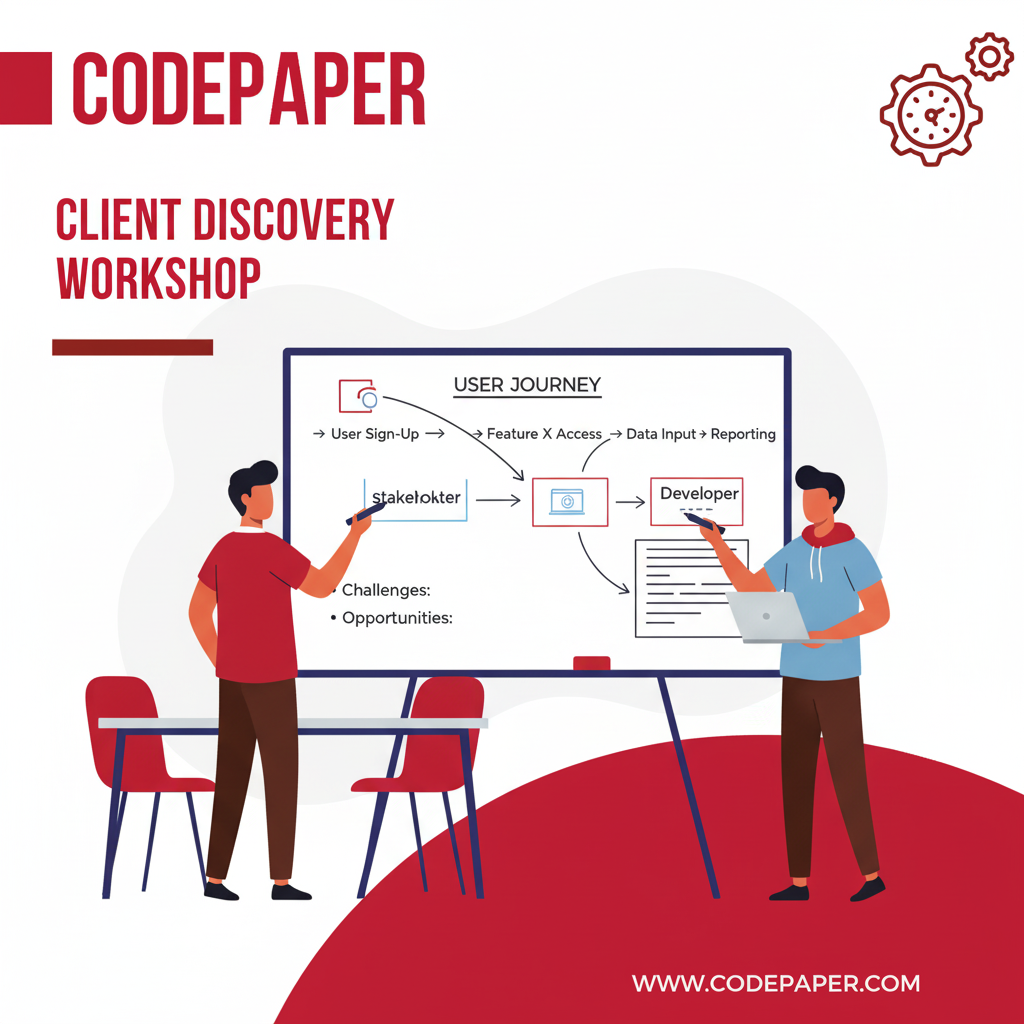
- Discovery workshop: Invite architecture, UX, and QA to the same table. Capture risks and unknowns early.
- Architecture sketch: Review stack options (Laravel/Node/.NET; React/Vue) and a first-pass domain model.
- Delivery plan: Milestones, demo cadence, QA strategy, CI/CD, and observability plan.
- Commercials: Fixed-scope for MVP, flexible scope for iteration, and clear change-management.
To understand what a mature web program looks like, see this external overview of core concepts in a web application development guide for broader context.
Budgeting and realistic timelines
Costs vary by scope and risk. Here’s a directional range we see in 2025 across North American projects:
- Discovery sprint (2–3 weeks): $8k–$25k depending on workshops, prototypes, and integration depth.
- MVP (10–16 weeks): $80k–$250k depending on features, data model complexity, and integrations.
- Scale-up phase (ongoing): $15k–$60k/month for enhancements, performance work, and support.
Teams compress timelines by reducing unknowns early, building the smallest useful version first, and enforcing a strong definition of done (functional tests, security gates, and demoable increments).
Choosing the right stack—for your context
- Laravel: Rapid backend delivery, rich ecosystem, clear conventions—great for admin-heavy and B2B tools.
- Node.js: Event-driven, real-time, and microservices-friendly—ideal for streaming and collaborative features.
- .NET: Enterprise alignment, strong tooling, and excellent performance on Windows-centric estates.
- React/Vue: Mature component models, robust state management, and great DX; pair with SSR when SEO matters.
When comparing options, consider team familiarity, hosting model, and the shape of your data. As we outline in our bespoke software playbook for Toronto teams, technology choices should follow the user and business model—not the other way around.
DevOps, CI/CD, and quality you can trust
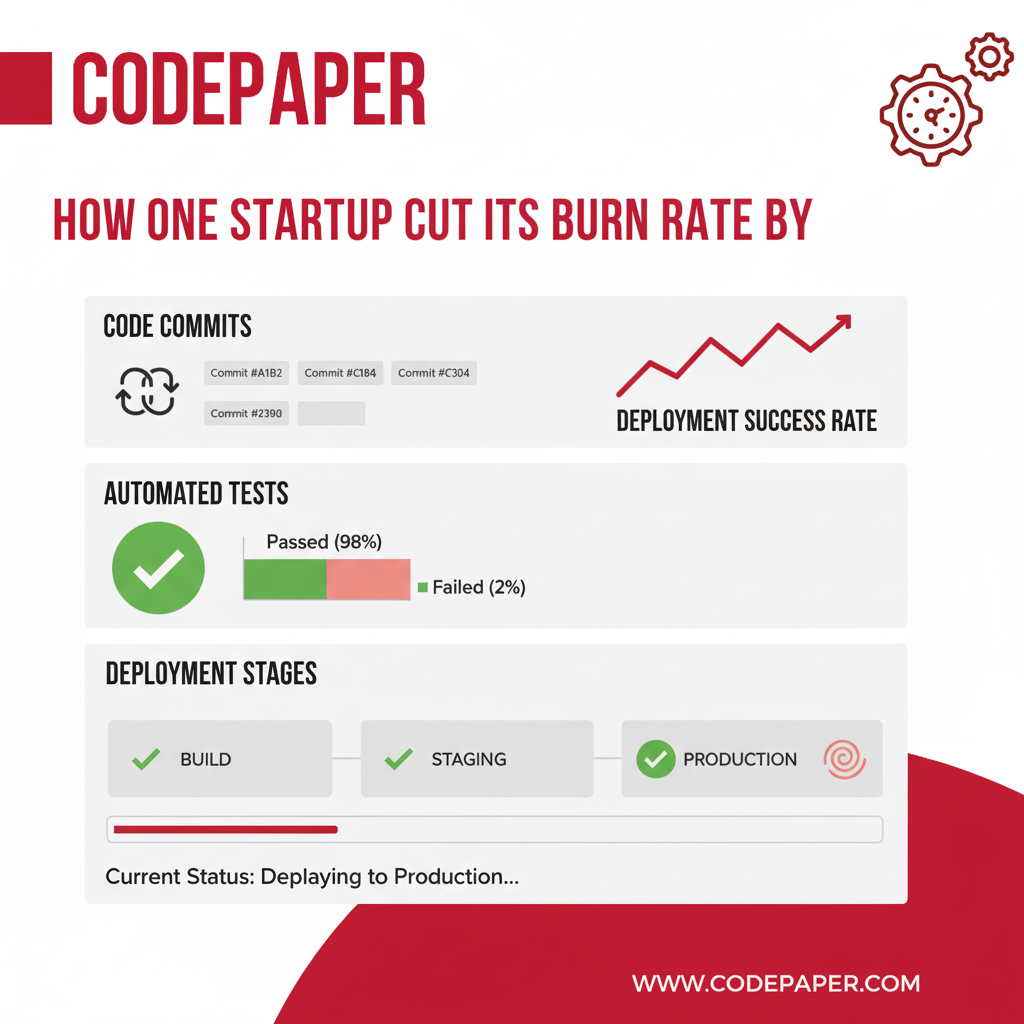
A partner’s DevOps maturity is the best predictor of delivery stability. Ask to see their pipeline: branch strategy, automated unit/integration tests, static analysis, secrets scanning, and blue/green or canary deployments. Evaluate environment strategy (dev, test, staging, prod) and how they handle data migrations and rollbacks. For a neutral checklist, review this guide to choosing a DevOps partner and bring its questions to your vendor interviews.
AI automation, data, and analytics
Modern web apps increasingly embed AI-driven workflows: classification, routing, anomaly detection, and RAG-enhanced search. If you’re exploring automation, treat models like any component: versioned, monitored, and subject to privacy controls. Our team provides AI automation consultancy and data analytics services in Canada to help you move from proof-of-concept to reliable production, including human-in-the-loop reviews and audit trails.
Security, privacy, and compliance
Start with a risk register. Classify data, map data flows, and align controls (RBAC, encryption at rest/in transit, key rotation). Enforce OWASP-aligned secure coding and periodic dependency reviews. If you operate in regulated environments (finance, healthcare), allocate time for evidence capture: test results, change logs, and incident runbooks. You’ll thank yourself during audits.
Local collaboration considerations (Toronto/GTA)
While most delivery is remote-first, key milestones benefit from live whiteboarding—kickoff, architecture alignment, and usability testing. We regularly meet near our address at Unit 20 – 120 Woodstream Blvd, ON (L4L 7Z1), which is close to Highway 7 and Highway 27, with straightforward access from Pearson International Airport for out-of-town stakeholders.
Local Tips
- Tip 1: For workshops near Woodstream Blvd, plan arrivals via Highway 27 or Highway 7; both offer reliable access and parking options.
- Tip 2: Winter traffic can slow the 400-series highways. Book morning sessions after 10 a.m. to miss rush-hour congestion and leave buffer time for weather.
- Tip 3: If you’re flying in, Pearson International Airport is about a 15–20 minute drive in light traffic—schedule back-to-back sessions to maximize time on-site.
For teams planning a hybrid approach, you can combine on-site discovery with remote sprints. Our app development team in Toronto often facilitates day-one kickoff in person, then pivots to a cadence of remote demos.
A mini case snapshot
Scenario: A franchise network needed a scheduling and compliance portal across 150+ locations. We ran a two-week discovery to map data flows and permissions, selected Laravel + React for speed and maintainability, and set up CI/CD with environment parity. The MVP shipped in 12 weeks with role-based access, audit logs, and automated reporting. Outcome: manual coordination time cut by ~45% and incident rates dropped thanks to clear observability.
How we work at Codepaper
- Discovery and planning: Business goals, personas, journeys, risks, and a first-pass architecture.
- Design and prototyping: Clickable flows for fast validation; accessibility checks baked in.
- Build and integrate: API-first development, automated tests, and CI/CD to reduce regression risk.
- Hardening and launch: Load testing, security review, and a staged rollout plan with monitoring.
- Operate and improve: Post-launch analytics, A/B tests, backlog grooming, and quarterly roadmap reviews.
We help teams ship fast without cutting corners—combining custom software development, DevOps services in Canada, and AI automation. Let’s scope a 2–3 week discovery to de-risk your build and align a roadmap that your stakeholders can approve.
Related capabilities you may need
- Top-reviewed Toronto developers for credibility checks.
- Web development in Toronto for local collaboration options.
- Custom software services to align build/operate models.
- Mobile and cross-platform apps if you also need iOS/Android.
Key Takeaways
- Define clear outcomes, constraints, and success metrics before you evaluate vendors.
- Prioritize partners with robust DevOps, security by design, and real production references.
- Use discovery sprints to de-risk unknowns and compress timelines.
- Pick technology to fit the business model and data—not the other way around.
- Blend remote delivery with strategic in-person sessions around Toronto/GTA when it matters.
FAQ
How do I shortlist a web app development company quickly?
Write 3–5 measurable goals, define constraints, and ask for directly relevant case studies. Run a 60–90 minute discovery call to evaluate architecture thinking, QA approach, and DevOps maturity. Favor partners who propose a clear, incremental delivery plan and can show working prototypes early.
What does an MVP typically cost and how long does it take?
In 2025, most web MVPs we see land between $80k–$250k over 10–16 weeks, depending on feature depth, integrations, and compliance needs. Costs are lower when data models are simple and third-party APIs are stable; they increase with complex roles, offline support, and advanced analytics.
Is staff augmentation better than a managed agency?
It depends on your internal leadership. If you have strong PM and engineering leads, staff augmentation can fill gaps fast and economically. If you need cross-functional direction (UX, architecture, QA, DevOps), a managed partner reduces coordination overhead and typically ships faster with fewer regressions.
Which framework should we choose: Laravel, Node.js, or .NET?
Choose based on context. Laravel is great for back-office and B2B; Node.js excels at real-time and event-driven workloads; .NET aligns with Microsoft-first enterprises. Front-end choices such as React or Vue depend on team skills and UI complexity. Prototype the riskiest flows first before you commit.
How do I evaluate a vendor’s DevOps maturity?
Ask to see their pipeline (tests, static analysis, secrets scanning), environment strategy (dev/test/staging/prod), and deployment method (blue/green, canary). Look for automated rollbacks, observability tools, and a clear incident response plan. Their answers will tell you how reliably they can ship.
Ready to move? If you’re near Toronto or the GTA, we can meet at Unit 20 – 120 Woodstream Blvd, ON or connect virtually to scope your MVP or modernization.
Final CTA: Book a discovery session with Codepaper Technologies Inc. in ON to align goals, stack, and delivery plan for your next web app.
