
Custom Web App Development Service: The Complete 2026 Guide
Quick Answer
A custom web app development service plans, designs, builds, and supports browser-based software tailored to your workflows. From our ON office at Unit 20 – 120 Woodstream Blvd, Codepaper Technologies Inc. delivers secure, scalable web apps using Laravel, React/Vue, and cloud-native DevOps for startups, mid-sized firms, and enterprises across Canada.
Outgrowing off-the-shelf tools? You’re not alone. Teams across Canada need flexibility, speed, and security—without duct-taped spreadsheets. That’s where a custom web app development service fits.
- Understand what a custom web application is (without buzzwords).
- See why it matters for scale, security, compliance, and speed to market.
- Learn how Codepaper delivers—from discovery to launch to iteration.
- Compare architectures, frameworks, testing strategies, and DevOps practices.
- Use checklists, best practices, and 15+ real-world examples across industries.
Overview
- Custom web apps fit your exact workflows, integrate with your systems, and evolve as you grow.
- Codepaper’s stack: Laravel + React/Vue, secure SDLC aligned to OWASP, and CI/CD automation.
- Delivery models: managed delivery, staff augmentation, and hybrid.
- Industries: fleet management, education, food service, finance, construction, manufacturing, healthcare, retail, logistics, and solar energy.
Local Tips
- Tip 1: Visiting our ON office near the GTA corridors? Plan meetings to avoid rush hours around Highway 427 and Highway 7; remote workshops are always available.
- Tip 2: Winter storms can affect in-person sessions; we keep projects moving with virtual discovery and cloud-based collaboration.
- Tip 3: For Canadian clients, we align with PIPEDA and regional data residency options—ask about hosting regions during discovery.
IMPORTANT: We tailor delivery to your team’s schedule and compliance needs across Canada.
What Is a Custom Web App?
A custom web application is software built for your unique workflows and objectives, delivered via the browser. Unlike generic platforms, it’s designed around how your business actually operates.
- Tailored features: Role-based access, dashboards, workflows, and reports unique to your team.
- Seamless integrations: Connect CRMs, ERPs, payment gateways, telematics, learning tools, or data lakes.
- Scalable foundation: Designed to handle growth, traffic spikes, and multi-tenant models.
- Secure-by-default: Codepaper adheres to OWASP guidance and a secure SDLC.
- Device-agnostic: Responsive UX and mobile-first design; optional companion mobile apps.
Here’s the thing: a custom web app is a business asset. It captures your IP, accelerates operations, and differentiates your brand.
Why a Custom Web App Development Service Matters
- Eliminate process gaps: Replace brittle spreadsheets and mismatched tools.
- Speed to market: Codepaper’s rapid MVP approach ships value fast, then iterates.
- Automation and AI: Embed AI for routing, recommendations, fraud checks, or forecasting.
- Compliance-ready: Build for data privacy rules and industry standards from day one.
- Ownership: Your roadmap, your priorities, your competitive edge.
- Reliability: Web apps with observability and SLAs reduce downtime and surprises.
- Customer experience: UX that fits real tasks means adoption sticks.
You might be wondering: is custom always the answer? Not always. It’s ideal when your workflows are strategic, at scale, or compliance-heavy—and off-the-shelf limits progress.
How Custom Web App Development Works at Codepaper
Our end-to-end process is structured, transparent, and outcome-driven. We deliver in iterative sprints and align every release to business outcomes.
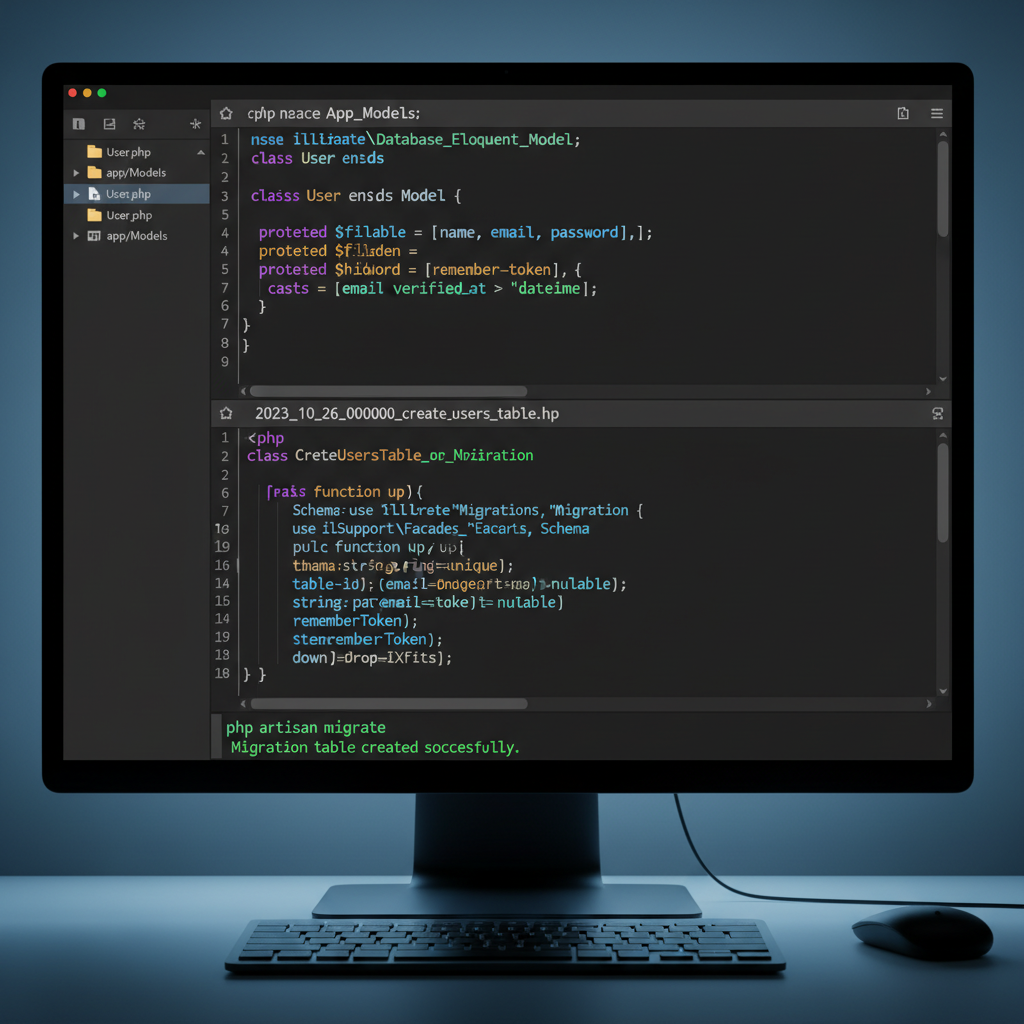
1) Discovery & Alignment
- Business goals: Clarify desired outcomes, constraints, success metrics.
- User research: Map personas, journeys, and pain points; prioritize high-impact use cases.
- System audit: Review legacy apps, data models, integrations, and security posture.
- Deliverables: Brief, scope hypotheses, early backlog, and preliminary architecture notes.
For a deeper look at planning and iteration, see our agile custom delivery approach for ceremonies, cadences, and outcomes.
2) Product Strategy & UX
- Experience design: Wireframes, flows, and clickable prototypes for rapid feedback.
- Prioritized roadmap: MVP first, then iterative releases to de-risk and learn.
- Acceptance criteria: Clear definitions of done for each feature.
Great UX reduces support tickets and speeds adoption. Practical tips in our UX/UI value overview.

3) Architecture & Tech Stack
- Backend: Laravel or Node.js with REST/GraphQL APIs; domain-driven design when helpful.
- Frontend: React or Vue.js; SSR/ISR for SEO-sensitive modules; accessibility-focused UI.
- Data: Relational (MySQL/PostgreSQL) plus analytics warehouse; caching with Redis.
- Cloud: AWS/Azure/GCP; containers with Docker; orchestration with Kubernetes when warranted.
- Security: OWASP ASVS alignment, secrets management, SSO/OAuth2, audit logging.
4) Delivery & DevOps
- CI/CD: Automated tests, code quality gates, and blue/green or canary deployments.
- Observability: Centralized logs, metrics, and real-time alerts.
- Environments: Dev, staging, and production parity to reduce surprises.
- Documentation: Living docs and runbooks; knowledge transfer is baked in.
5) QA & Security Testing
- Test pyramid: Unit, integration, API, and end-to-end tests; visual regression where needed.
- Security: Static/dynamic analysis, dependency scanning, and regular pen-test cycles.
- Data quality: Seed datasets, anonymized fixtures, and migration rehearsal.
6) Launch, Governance & Iteration
- Pilot cohorts: Feature flags to roll out safely and learn fast.
- Telemetry: Funnels, heatmaps, and A/B tests inform the backlog.
- Support: SLAs, on-call runbooks, and continuous improvement sprints.
- Governance: Backlog triage, change control, and quarterly roadmap reviews.
- KPIs: Cycle time, release frequency, adoption, NPS, and SLA adherence.
Architecture Comparison Table
| Approach | Best For | Pros | Trade-offs |
|---|---|---|---|
| Modular Monolith | MVPs, small-to-mid apps | Simplicity, speed, easy observability | Requires discipline to avoid tight coupling |
| Microservices | Large, complex domains | Independent scaling, team autonomy | Operational overhead, distributed complexity |
| Event-Driven | High-throughput, async tasks | Resilience, decoupling | Event modeling and idempotency required |
| Serverless | Spiky or bursty workloads | Elastic scale, managed infra | Cold starts, vendor constraints |
| API-First | Partner ecosystems | Clear contracts, versioning | Requires robust governance |
Best Practices for 2026
- Start with outcomes: Tie features to measurable KPIs (cycle time, adoption, SLA, NPS).
- Design for iteration: Feature flags, progressive disclosure, and continuous discovery.
- Secure by design: Threat modeling early; enforce code scanning and dependency hygiene.
- Automate the pipeline: CI/CD with test coverage gates and staged rollouts.
- Invest in UX: Accessibility, performance budgets, and usability testing per release.
- Right-size the architecture: Avoid premature microservices; evolve when signals justify.
- Observability first: Golden signals (latency, traffic, errors, saturation) from day one.
- Documentation as code: ADRs, API specs, and runbooks maintained with the repo.
- Data governance: Clear ownership, data contracts, and retention policies.
- Performance budgets: Target time-to-interactive and server response thresholds.
Tools & Resources We Use
- Frameworks: Laravel, Node.js, React, Vue.js; Flutter for mobile companions.
- Data & analytics: MySQL/PostgreSQL, Redis, and BI/warehouse integrations.
- DevOps: Git, Docker, GitHub Actions/Azure DevOps, IaC for repeatable environments.
- Security: SAST/DAST scanners, SSO/OAuth2, secrets management, audit logs.
- QA: Test runners, API testing, visual regression, and load testing suites.
- Modernization: Patterns for legacy software modernization and application re-engineering.
Want more on UX and mobile best practices? Explore how our app development team in Toronto approaches platform consistency.
Performance & Scalability Tactics
- Caching strategy: Redis for sessions and hot data; cache invalidation rules documented.
- Database tuning: Index design, query plans, and connection pooling.
- Horizontal scale: Stateless services behind load balancers; autoscaling policies.
- Async jobs: Queues for heavy workloads; idempotent job handlers.
- Edge/CDN: Static assets and API caching where safe; regional POP selection.
- Profiling: APM tools to identify hot paths; regular performance reviews.
- Resilience: Circuit breakers, retries with backoff, and bulkheads for isolation.
- Data growth planning: Archival policies, partitioning strategies, and storage tiers.
Security & Compliance Deep Dive
- Identity: SSO (SAML/OIDC), MFA, and least-privilege roles.
- Encryption: TLS in transit, KMS-managed keys at rest, routine rotation.
- Secrets: Vaulted secrets, no secrets in code; short-lived credentials.
- Secure coding: OWASP Top 10 controls, input validation, output encoding.
- Supply chain: Dependency pinning, SBOMs, and vulnerability monitoring.
- Auditability: Immutable logs, tamper detection, and event correlation.
- Compliance readiness: PIPEDA alignment; options to support HIPAA-like safeguards.
Integration Patterns
- Contract-first APIs: Define OpenAPI/GraphQL schemas before building.
- Event bridges: Publish-subscribe models for decoupled systems.
- Webhooks: Reliable outbound with signature verification and retries.
- Data sync: Change data capture for consistent cross-system state.
- Identity federation: SSO with SAML/OIDC; role mapping and provisioning.
Migration & Modernization
- Strangler pattern: Gradually replace legacy endpoints with modern services.
- Data migration: Rehearse transforms and validations; dual-write to verify.
- UI modernization: Component libraries, accessibility upgrades, and performance budgets.
- Risk controls: Feature flags, kill switches, and rollback strategies.
Comparing vendors in the GTA? Our insights on Toronto software development companies outline selection criteria worth considering.
Governance, KPIs & Analytics
- Roadmap governance: Quarterly planning with cross-functional input.
- KPI framework: Adoption, task success rate, cycle time, error budgets, NPS.
- Product analytics: Funnels, cohorts, path analysis, and feature engagement.
- Release metrics: Deployment frequency, lead time, change fail rate, MTTR.
- Data ethics: Consent, transparency, and privacy-by-design practices.
Team Structure & Collaboration
- Core roles: Product Manager, Tech Lead, Backend/Frontend Engineers, QA, DevOps, UX.
- Augmented specialists: Data engineers, security analysts, and mobile app developers as needed.
- Cadences: Standups, sprint planning, demos, and retrospectives.
- Artifacts: Roadmaps, ADRs, runbooks, and test plans.
- Communication: Clear channels for decisions, blockers, and incident response.
Prefer to embed our talent within your team? Codepaper offers staff augmentation to accelerate delivery while you retain control.
Common Risks & How We Mitigate Them
- Scope creep: Guardrails via prioritized backlogs and explicit acceptance criteria.
- Unclear ownership: RACI and domain ownership models early in the project.
- Integration surprises: Spike tickets, sandbox testing, and contract-first APIs.
- Security drift: Automated scanners, dependency checks, and release gates.
- Performance regressions: Canary releases, load tests, and SLO monitoring.
- Knowledge silos: Pairing, code reviews, and living documentation.
Project Readiness Checklist
- Top 3 business outcomes you must achieve this quarter and next.
- Primary user personas and their most painful workflows.
- Existing systems to integrate (CRM, ERP, identity, payments, data).
- Compliance considerations (PIPEDA, audit needs, data residency preferences).
- Reporting and analytics that prove success (dashboards and alerts).
- Team availability for discovery workshops and weekly check-ins.
- Decision cadence for scope, trade-offs, and go/no-go moments.
How to Select the Right Partner
- Industry relevance: Experience in your domain (fleet, education, finance, etc.).
- Technical depth: Proven work with Laravel/Node, React/Vue, CI/CD, and cloud.
- Security posture: Ask for secure SDLC practices and evidence of OWASP alignment.
- Delivery model: Ensure managed delivery, staff augmentation, and hybrid options.
- References: Request anonymized case studies and outcomes, not just features delivered.
- Culture fit: Collaboration style, transparency, and shared definitions of success.
For a sense of our cadence and transparency, review our agile approach (ceremonies, artifacts, and release rhythms).
Mini Case Studies (Anonymized)
- Fleet management (B2B portal): Laravel + React portal unifying telematics, maintenance schedules, and driver scoring. Outcome: fewer manual reconciliations, faster dispatch.
- Education (LMS extensions): Assessment and analytics modules with role-based permissions. Outcome: engagement lift and simplified reporting.
- Food service (franchise ops): Multi-tenant web app for menu updates, supply requests, and field audits. Outcome: consistency across locations and better compliance.
- Finance (risk workflow): Secure case management with audit trails and SSO. Outcome: traceability, faster reviews, happier auditors.
- Manufacturing (inventory visibility): Web dashboards with barcode integrations. Outcome: real-time status and tighter cycle counts.
- Healthcare (intake forms): Mobile-friendly web forms with validation and encryption. Outcome: fewer errors and shorter wait times.
- Retail (marketplace): Vendor onboarding, product catalogs, and order routing. Outcome: increased SKU coverage without extra headcount.
- Logistics (dispatch console): Route planning with live updates. Outcome: improved on-time delivery rate.
- Construction (field QA): Photo capture and checklists for site inspections. Outcome: faster closeouts and cleaner audit trails.
- Solar energy (asset portal): Performance dashboards and alerts. Outcome: proactive maintenance and uptime gains.
- Hospitality (guest services): Self-service bookings and requests. Outcome: higher guest satisfaction scores.
- Nonprofit (grant management): Application tracking with reviewer workflows. Outcome: reduced processing time.
- Professional services (proposal hub): Templates, approvals, and e-sign workflows. Outcome: faster win cycles.
- Enterprise IT (license tracking): Compliance views and automated alerts. Outcome: fewer surprises at audit time.
- eCommerce (returns portal): Self-serve returns and RMA automation. Outcome: increased retention after returns.
FAQ
- How do I know if I need a custom web app instead of off-the-shelf?
- If your process is unique, regulated, or central to your advantage—and current tools force workarounds—a custom build pays off in control, integration, and scalability.
- What stack do you typically recommend?
- For most use cases, Laravel on the backend with React or Vue on the frontend offers speed, reliability, and an excellent developer ecosystem. We pair this with automated CI/CD and cloud services.
- How do you manage quality and security?
- Secure SDLC, code reviews, automated tests, and OWASP-aligned controls. We add SAST/DAST scanning, dependency checks, and staged releases with monitoring.
- Can you integrate with our existing systems?
- Yes. We regularly integrate CRMs, ERPs, payment gateways, telematics, identity providers, and data platforms via REST/GraphQL APIs and webhooks.
- What engagement models are available?
- Managed delivery for end-to-end ownership, staff augmentation to boost your team, or a hybrid model. We’ll align on cadence, tools, and success metrics during discovery.
Key Takeaways
- A custom web app development service aligns software to your exact workflows—no compromises.
- Codepaper delivers with Laravel, React/Vue, cloud-native DevOps, and rigorous QA.
- Start small with an MVP, measure impact, and iterate toward a durable platform.
- Invest in security, observability, and UX early—they compound over time.
Next Steps
- Outline your top 3 outcomes and constraints.
- Gather sample data, existing docs, and user roles.
- Book a discovery session with Codepaper to align scope and a first release.
Based in ON at Unit 20 – 120 Woodstream Blvd, we support clients across Canada and North America with hybrid workshops and remote delivery.
