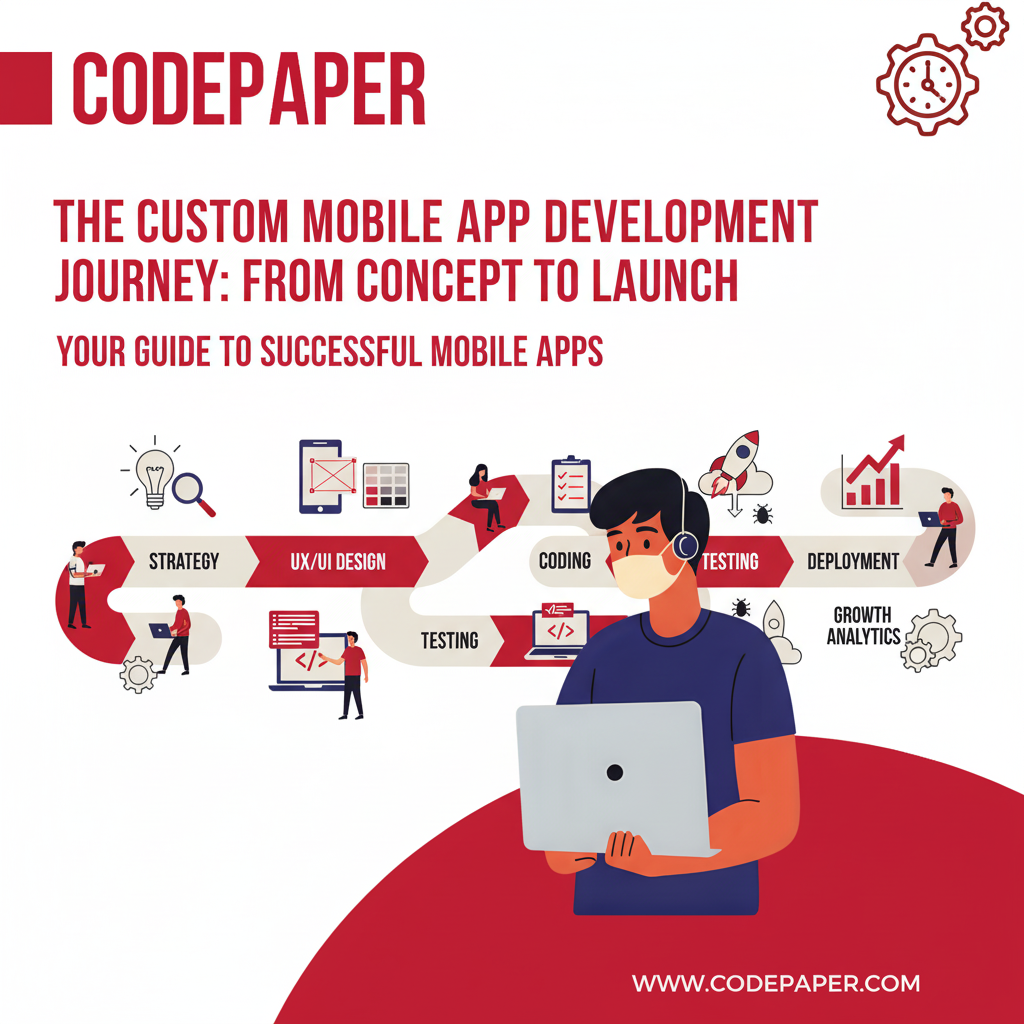
Custom Mobile App Development: A No‑Fluff Playbook for 2025
For product leaders across fleet management, e-commerce, finance and banking, restaurant franchise operations, solar energy, construction TAS/sign tracking, and manufacturing inventory, this practical guide breaks down custom mobile app development—strategy, UX, platform choices, security, DevOps, costs, and timelines—so you can move from idea to impact with confidence.
- Start with measurable outcomes and a lean, validated scope (MVP) that fits your market and risk profile.
- Pick the right platform approach (native vs cross-platform) based on user experience, speed, and total cost of ownership.
- Design fast, test often: user flows, clickable prototypes, and clear acceptance criteria reduce rework by weeks.
- Build with secure APIs, cloud-native infrastructure, and a dependable CI/CD pipeline to ship small, safe increments.
- Launch with staged rollouts, in-app analytics, and a backlog that prioritizes real user value.
- Scale with observability, performance budgets, and a product roadmap tied to business KPIs.
Quick Answer
In ON at Unit 20 – 120 Woodstream Blvd, Codepaper Technologies Inc. guides custom mobile app development from strategy to launch for Toronto, Vancouver, and clients across Canada. Expect user-first design, secure APIs, and CI/CD for fast, reliable releases.
Local Tips
- Tip 1: If you’re visiting our ON office near Woodstream Blvd, plan arrival around Highway 7 and Highway 27 traffic; Highway 427 can back up during rush hour.
- Tip 2: Winter releases? Factor in holiday slowdowns and weather-related delays when organizing in-person UAT sessions.
- Tip 3: For stakeholder workshops, Pearson Airport is 15–25 minutes away (traffic permitting), making it convenient for national teams.
What “custom mobile app development” really means in 2025
Custom mobile app development is the end-to-end process of defining a business problem, designing a user-centered solution, and building secure, scalable iOS and Android applications that integrate with your data, workflows, and teams. It’s not just writing code; it’s aligning strategy, UX, engineering, and operations so your product ships reliably and grows sustainably.
At Codepaper Technologies Inc., we build native and cross-platform apps backed by resilient APIs, analytics, and a CI/CD backbone. If you’re exploring partners, see how we approach outcomes in our custom software development services guide.
Native vs cross‑platform: how to choose wisely
Choosing between native (Swift/Kotlin) and cross-platform (Flutter/React Native) isn’t a religion—it’s a business decision. Use the lens of user experience, release velocity, team skills, and total cost of ownership.
| Criteria | Native (iOS & Android) | Cross‑Platform |
|---|---|---|
| UX Performance | Best-in-class, platform-specific patterns | Excellent for most use cases; heavy graphics may need native modules |
| Speed to Market | Two codebases; more parallel effort | Single codebase; faster MVP and iteration |
| Team Skills | Requires iOS and Android specialists | One team can own most of the stack |
| Total Cost | Higher over time for parity and maintenance | Lower for many products; still budget native modules |
For teams prioritizing rapid market validation or budget control, cross-platform is often ideal. For experiences where platform-native polish and device-specific features are paramount, native leads. If you need a Toronto perspective, skim our app development company in Toronto overview.
Design that reduces rework: from user flows to clickable prototypes
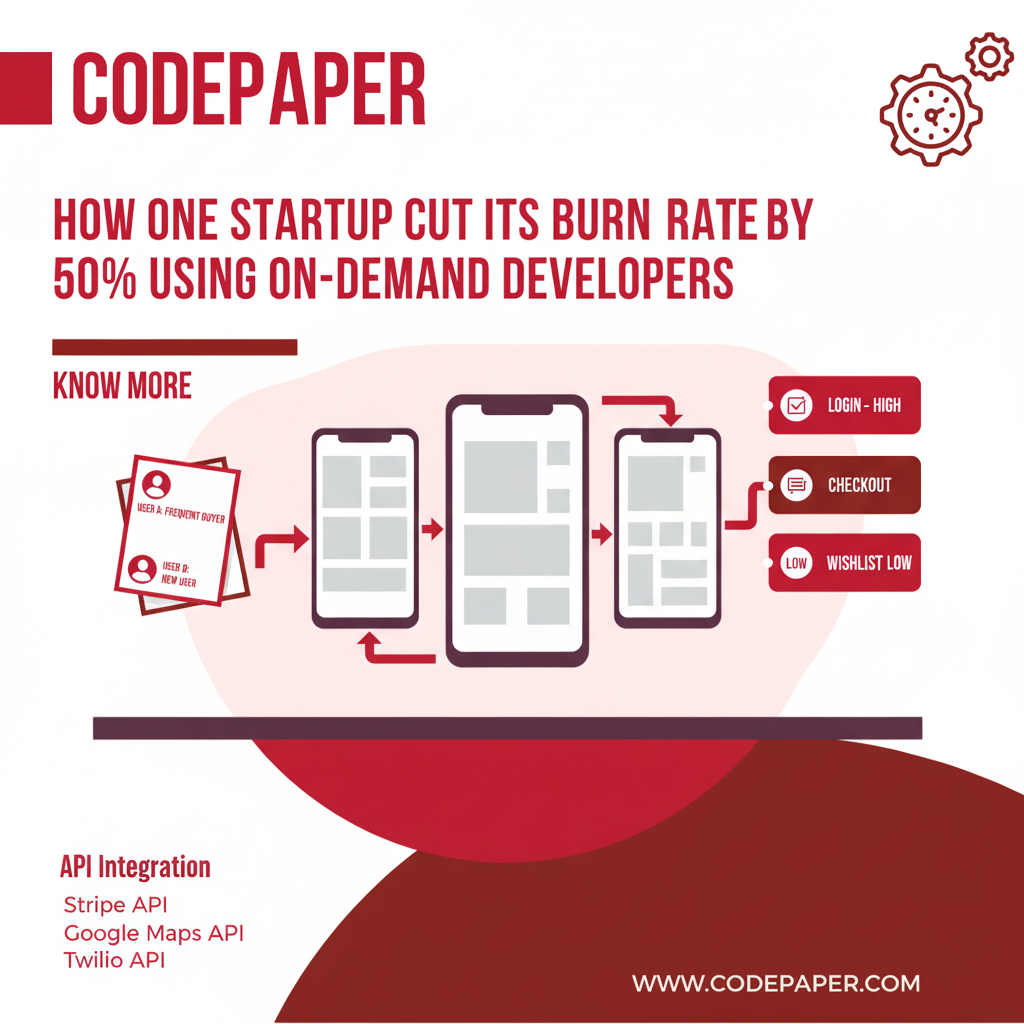
Great apps feel simple because the hard thinking happens before a single line of code. We map personas, jobs-to-be-done, and critical paths, then translate them into wireframes and clickable prototypes. This lets stakeholders “use” the future app early, uncover edge cases, and align on scope—saving weeks of rework later.
Artifacts that matter
- User stories with acceptance criteria
- Annotated wireframes and clickable prototypes
- API contract drafts and data mapping
- Accessibility considerations from day one (contrast, tap targets, labels)
Want to go deeper on velocity and quality? Explore our Toronto software playbook for the end-to-end practices we use across industries.
A practical six‑phase delivery framework (what we actually do)
This framework keeps delivery predictable without adding ceremony. It’s outcome-first and ruthlessly focused on value.
| Phase | What happens | Key outputs |
|---|---|---|
| 1) Discover | Stakeholder interviews, KPI & risk alignment, technical assessment | Opportunity canvas, success metrics, roadmap hypothesis |
| 2) Design | User flows, wireframes, prototypes, accessibility baseline | Clickable prototype, acceptance criteria, prioritized backlog |
| 3) Build | Sprint-based development, API contracts, automated tests | Incremental releases, tested features, code reviews |
| 4) Integrate & Secure | SSO, payments, device features, OWASP-aligned controls | Hardened build, threat model, compliance checklist |
| 5) Release & Measure | Staged rollout, crash/error monitoring, funnel analytics | Live app, dashboards, prioritized improvement backlog |
| 6) Scale & Evolve | Performance tuning, A/B tests, expansion features, localization | Roadmap and budgets tied to KPIs and adoption |
Architecture and APIs: the backbone of reliable apps
Great mobile apps rely on predictable, well-documented APIs. For many projects, we use Laravel for backend APIs due to its mature ecosystem and developer velocity. Our Laravel development services combine API versioning, structured error handling, and observability to keep releases calm and reversible.
If you’re evaluating partners that can handle mobile plus backend, browse custom software development in Toronto to see how we connect systems end-to-end.
Security and compliance without the drama
Security is a product feature. We apply threat modeling, secure storage, network hardening, and dependency hygiene. For finance and banking, we align with PCI DSS and common PII safeguards. For health and field operations, we emphasize offline-first design, encrypted data at rest, and least-privilege access. We also advocate secure coding patterns aligned to OWASP Mobile guidance.
Pragmatic security checklist
- Platform-secure storage only (Keychain, Keystore); no secrets in code
- Short-lived tokens; refresh flows; automatic revocation
- Pinning and TLS everywhere; input validation on server
- Static analysis, SCA, and dependency update cadence in CI
- Role-based access control and audit trails for sensitive actions
Delivery tooling: CI/CD, quality, and observability
Speed without safety is a gamble. Our DevOps practice bakes in automated tests, code review, and staged deployments. Canary releases, crash monitoring, and feature flags allow fast learning with low risk. If you’re new to the approach, our team offers CI/CD pipeline consulting and DevOps services in Canada to modernize delivery.
For a broader market perspective on enterprise delivery, this independent enterprise mobile app development guide lays out considerations around governance and scale.
Timelines and costs: honest ranges you can plan around
Every product is unique, but patterns repeat. Here are pragmatic ranges we see for custom mobile app development, assuming a lean MVP first, then iterative expansion.
Typical MVP (8–14 weeks)
- Scope: 1–2 critical user flows, basic analytics, and admin tools
- Team: Product lead, designer, 2–3 engineers, QA; fractional DevOps
- Outcome: Market validation with real users; roadmap to v1
Version 1.0 (3–6 months)
- Scope: Full flows, integration(s), security hardening, accessibility
- Team: Cross-functional squad with dedicated DevOps and QA
- Outcome: Public launch with support plan and KPIs
Scaling (ongoing)
- Scope: Performance, features for growth segments, team scaling
- Outcome: Quarterly roadmaps tied to revenue, retention, and NPS
Industry-specific accelerators we bring to the table
Because we serve multiple industries, we’ve built reusable patterns and components that shorten timelines while raising quality.
Fleet management
- Real-time tracking with battery-aware updates and offline sync
- Driver safety modules, alerts, and route optimization
E-commerce (construction supplies)
- Catalog management, pricing rules, quotes-to-order workflows
- Seamless checkout with tax, shipping, and ERP integration
Finance and banking
- Secure onboarding, identity verification, and transaction flows
- Monitoring, audit trails, and ledger integrations
Restaurant franchise management
- Store dashboards, ops playbooks, and field audits
- Promotions, loyalty, and mobile ordering integrations
Solar energy products and services
- Lead capture, sales CRM sync, and installation scheduling
- Remote system monitoring and service workflows
Manufacturing inventory management
- Barcode/QR scanning with robust offline handling
- Warehouse workflows, reorder logic, and analytics
Collaboration that actually scales
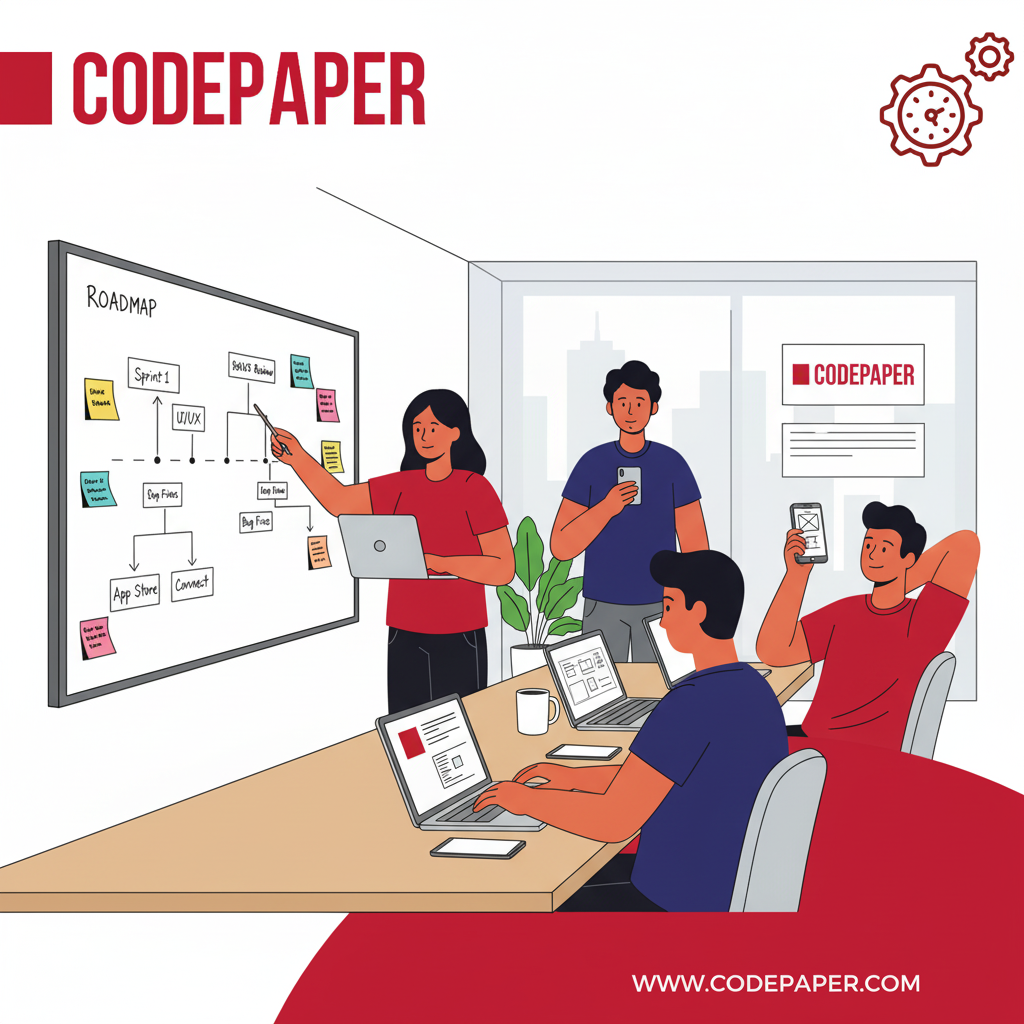
Clear roles, weekly demos, and a shared roadmap keep momentum high. We tune communication to your culture—Slack, Teams, or email—with a single source of truth for priorities and risks. If you need to scale fast, we augment teams while maintaining code standards and release hygiene.
Curious how we keep delivery fast without cutting corners? Skim our guide to shipping faster without compromise and compare it with our Toronto app delivery approach.
How to pick the right partner (especially if you’re in Toronto)
Beyond case studies and pitches, look for evidence of product thinking, DevOps maturity, and a bias toward measurable outcomes.
- Do they publish a clear delivery framework and release playbook?
- Can they handle backend APIs, security, and analytics—not just app UI?
- Will they help you say “no” to low‑value features and keep scope lean?
- Do they have experience in your industry or adjacent domains?
Get a sense of fit in our app development company in Toronto overview and our mobile app development services.
Mini case insight: shipping an MVP in weeks
A regional franchise group needed an operations app for audits, photo checklists, and corrective actions. We ran a two‑week discovery, produced a clickable prototype, and built a cross‑platform MVP in under 12 weeks. Staged rollout, in‑app analytics, and a prioritized backlog cut wasted effort and put real user feedback in play fast.
Risks to watch—and how we mitigate them
Scope creep
We timebox decisions, keep a living backlog, and frame tradeoffs in terms of outcomes, not features.
Integration surprises
API contracts and sandbox tests happen early. We build fallback paths and graceful degradation.
Performance regressions
Performance budgets and automated checks run in CI, with observability attached to every release.
Security drift
Dependency updates are part of the routine. Threat models and tests prevent accidental drift over time.
Key Takeaways
- Lean first: Validate the riskiest assumptions with the smallest, testable scope.
- Platform choice is strategic: Decide native vs cross‑platform based on UX, speed, and long‑term cost.
- Delivery discipline wins: CI/CD, testing, and analytics make every release safer and smarter.
- Security is built‑in: Treat controls and compliance as product features, not afterthoughts.
FAQ: Custom Mobile App Development
How do I decide between native and cross‑platform?
Anchor on business outcomes. If you need fastest time‑to‑market and one codebase, cross‑platform (Flutter/React Native) is often best. If you’re pushing device‑specific UX or advanced hardware features, native Swift/Kotlin can provide an edge. We’ll model tradeoffs against your roadmap and budget.
What’s the cost to build an MVP?
It depends on scope and integrations, but many MVPs land in the 8–14 week range with a compact team. We start with discovery to lock success metrics and a lean, testable backlog; then we estimate with clear assumptions, risks, and options to phase work.
How do you handle security for finance and banking apps?
We apply secure-by-default patterns: platform keychains, short‑lived tokens, TLS, and server‑side validation. We align with PCI DSS expectations, add audit trails and monitoring, and run static analysis plus dependency hygiene in CI/CD.
Can you work with our internal dev team?
Yes. We commonly co‑build with internal teams, establish coding standards and CI/CD, and provide staff augmentation to handle spikes. The goal is shared ownership, transparent progress, and calm releases.
